Hello! Welcome to the April edition of Dr. Pet Mom’s Delightful Pet Menagerie (DPM) Newsletter. Many pet parents care for small animals. These wonderful animals can be a good fit for families. This month’s menagerie is about hamsters, gerbils, ferrets, guinea pigs and chinchillas.
Hamsters
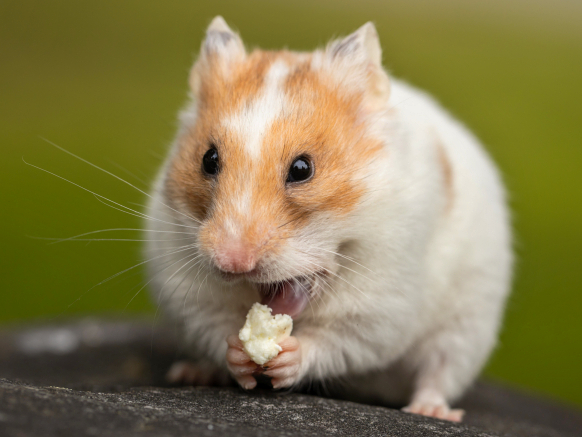
What do you know about hamsters? Do you know that hamsters can be big or small? And there are 19 species of hamsters.
For example, the European Hamster is the largest type of hamster and can grow to 13 inches. The European Hamster is considered rare and found mainly in western Asia and Europe.
The Dwarf Hamster is just 2 to 4 inches long and native to the desert. These hamsters thrive in small groups or pairs rather than living alone.
Fun Facts
- Hamsters are actually omnivores. They eat both plants and insects in the wild.
- Hamsters love to chew things. Chewing keeps their incisor teeth from growing too long. If their teeth are too long, hamsters can’t eat properly
- Hamsters live up to three years. They are happiest when surrounded by many toys.
- The five most popular hamster species as pets are: Roborovski, Syrian, Campbell’s Dwarf, Chinese and Winter White Russian Dwarf hamsters.
- Syrian hamsters are solitary, social and independent. They make good beginner pets and don’t need a lot of attention.
- Hamsters are nocturnal and enjoy daytime naps. They carry diseases like Salmonella. Hand washing is important after handling a hamster.
Gerbils
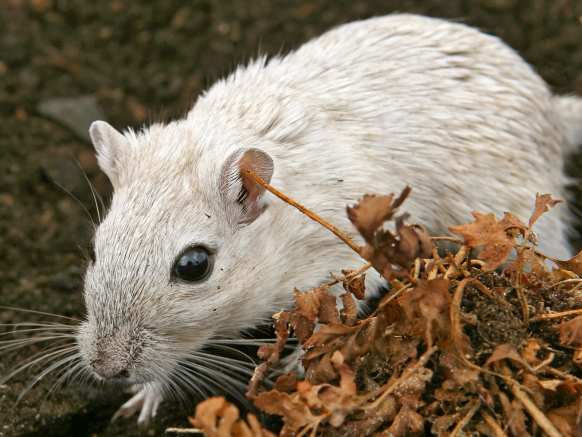
There are over 100 different species of gerbils. They are related to the brown rat, house mouse, and other members of the rodent family. Gerbils grow from 8 to 10 inches, nose to tail. They can live up to five years.
Fun Facts
- Gerbils sleep at night and favor the twilight hours of the day.
- In the wild, they forage for food during the early morning and late afternoon.
- Gerbils eat fresh fruits and vegetables or commercially produced rodent food.
- Mongolian Gerbils are very popular pets. The modern-day gerbils came from an original group of individuals (20 pairs) that researchers shipped from Mongolia.
- Gerbils are social animals and enjoy living in small family groups. They also enjoy plenty of places to hide and tunnel.
- Hand feeding your pet will help socialize them and make them feel comfortable when handled by humans.
- A large enclosure with soft shavings, or paper bedding for tunneling will keep your gerbils happy. Create multiple levels in the enclosure for hiding and tunneling.
- Gerbils make a good pet because they are friendly, small and easy to care for.
Ferrets
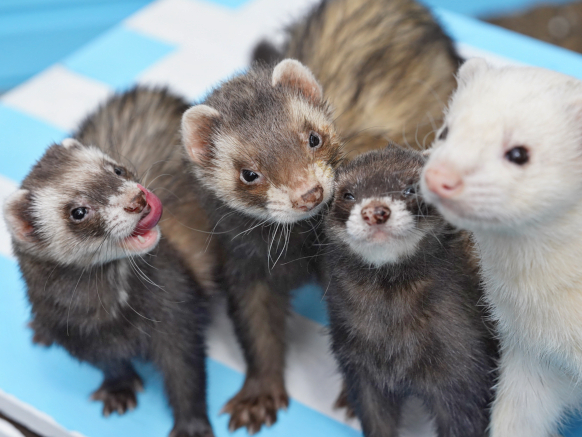
Ferrets were domesticated 2,500 years ago. They can live from 6 to 10 years on average and grow cuddlier after age three.
Ferrets are smart and thrive on attention. They can closely bond with humans. Ferrets are still “exotic” pets. Be sure to find a good ferret vet before you adopt.
Fun Facts
- Before you adopt, check to see if ferrets are legal in your state or town. For example, ferrets are not legal in California or Hawaii.
- Ferrets struggle to survive outdoors because of dehydration and their inability to stand heat. Keep wet towels, fresh cold water and frozen bottles in the cage to prevent heatstroke and overheating.
- Ferrets are strict carnivores and need raw meat, organs and bones. No fruits and vegetables in their diet.
- Ferrets need training to learn not to bite. Biting is their way of communicating. When they bite, they want to play with you. Just like cats, play aggression can lead to biting.
- If a female ferret (a jill) doesn’t mate, she can develop aplastic anemia which can be fatal. If you don’t breed ferrets, remember to spay or neuter.
- Ferrets will hiss like a snake if they are mad or scared. Be aware that hissing is a warning that your ferret will bite.
- Ferrets need exercise outside the cage for about four hours a day. Be sure to ferret-proof (secure room, close and lock cabinets, remove plants, remove things hanging from tables, mantles, desks) your home.
Guinea Pigs
Guinea pigs are the largest pet rodent and they live from 5 to 7 years. They are very social and prefer growing up with other babies rather than introducing them as adults. Guinea pigs are also called cavies.
Their long hair needs regular grooming. Guinea pigs carry diseases like Salmonella. Hand washing is important after handling a guinea pig.
Types of Guinea Pigs
Peruvian guinea pigs are the only guinea pig breed that was selectively bred for regional and national cavy shows. They have long, silky hair that grows up to 14 inches or more. They need extra grooming and are best suited for adults or experienced breeders.
Abyssinian guinea pigs are one of the oldest breeds of guinea pigs. They were used in display shows and are still very popular. They have a rough, spiky coat which forms patterns known as rosettes (swirls of hair). They have an outgoing personality and make good family pets.
Skinny guinea pigs or hairless guinea pigs look skinnier than other guinea pigs. They have some hair around their feet, legs, muzzle. They have soft skin all around their bodies.
The skinny pig personality is very calm, affectionate and well-behaved. They enjoy cuddles, socialization and petting. They remain calm even when handled.
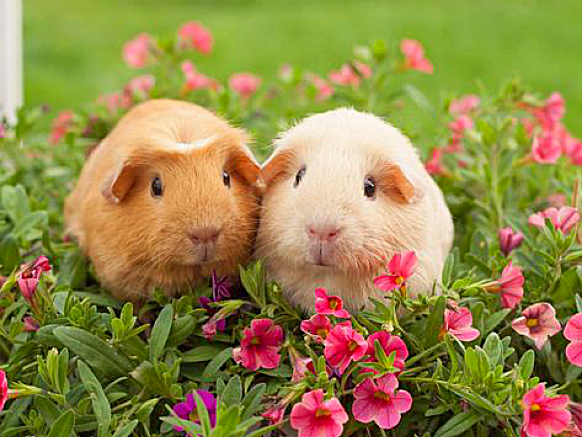
Teddy guinea pigs are short-haired and easy to care for. They are fluffy and soft, with a friendly, and cuddly nature. They make an excellent family pet.
Teddy guinea pigs are active, social, outgoing, curious and fun loving. They enjoy living with cage mates as well as humans. They are popular among children.
Teddies are active and smart. You can train your Teddy to learn tricks and commands.
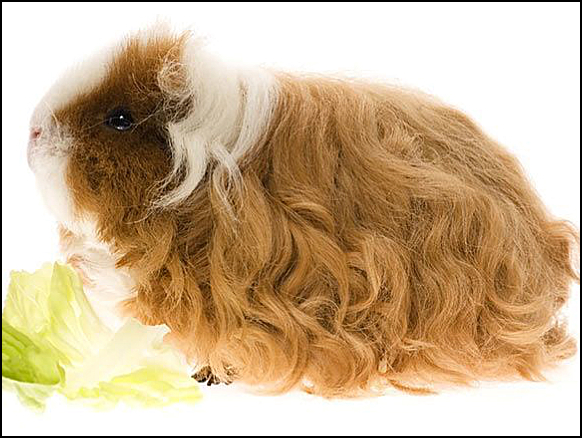
Texel guinea pigs have long, curly and thick hair with a rough coat. Regular grooming is important and they are very popular but not recommended for beginners.
Texel guinea pigs have a calm and sweet personality. They love grooming and will be very patient while you brush them. They enjoy playing and cuddling with you. If their personality suddenly changes, visit a vet asap.
Because of their short facial hair and long curly hair over their bodies, it’s hard to tell if they are underweight, overweight or normal. Monitor their weight with regular weight checks.
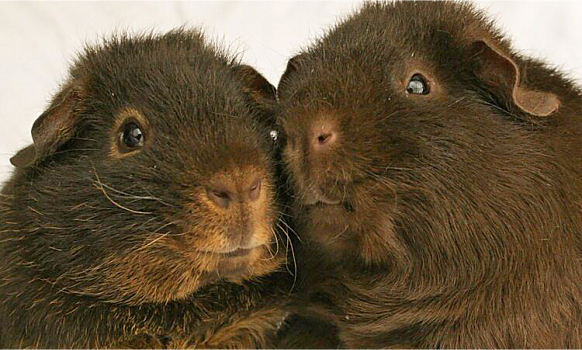
Crested guinea pig have a crest at the top of their head, shaped like a tuft or rosette of fur, like a crown. They have a sweet and calm nature and are easy to care for.
They can be shy which makes them easy to handle and train. Crested guinea pigs make an excellent family pet.
These short-haired guinea pigs are lovely to see. They come in two species, American guinea pig (white crest, different solid body color) and the Self guinea pig (crest the same color as their body).
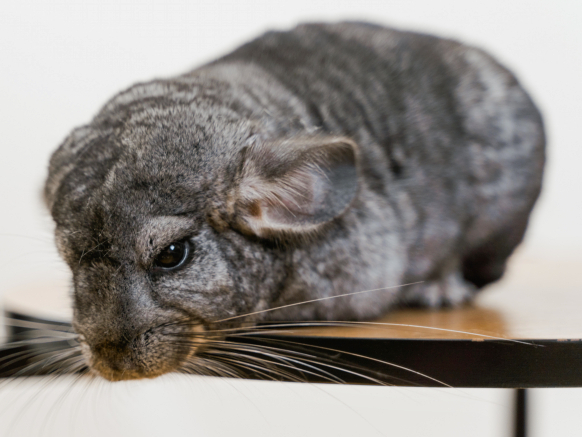
Chinchillas
Chinchillas are small rodents native to the Andes Mountains in south America. They appeared around 41 millions years ago. These agile animals adapted to the mountains and rocky terrain and can jump up to 6 feet.
Chinchilla are curious and independent. Their soft fur makes them popular pets. Chinchilla produce very little dander which makes them very close to hypoallergenic.
Fun Facts
- Chinchilla are very social. Adopt at least two chinchillas. They can die from depression when kept alone.
- House your chinchilla in a large, multilevel enclosure made from chew-proof material. Avoid direct sunlight, low humidity (below 60%) and drafty areas.
- Chinchillas are unable to sweat, which is partly why they are so prone to heat stroke in high temperatures. Ideal temperatures are between 60°F and 75°F.
- Chinchilla chew on anything. Keep them happy with lots of chew toys, like wooden blocks, pumice stones, or a large hamster wheel.
- Avoid getting your chinchilla wet at all costs. Their fur is very thick and unable to dry completely. In fact, fungal infections and even mold can occur. Instead, give them a dust bath twice a week for good health.
- They are quick to startle and need careful handling. Rough petting can cause chinchilla fur to loosen and slip off.
- Chinchilla caveat emptor: Chinchillas are very sensitive to heat. You may need a special room that stays cool during the warmer seasons. If you can’t accommodate cooler temperatures, a chinchilla may not be your first choice as a pet.
” A house is not a home without a pet.”
–Unknown
Book Update for 2023
Hope you’re enjoying the spring season!
This month, I finished a rough draft of my short ebook based on Dr. Pet Mom’s Delightful Pet Menagerie (DPM) Newsletter. My latest book will include new info in each chapter.
I’m excited to share these updates with you!
Thanks for stopping by.
Dr. Pet Mom
“Books are mirrors. You only see in them what you already have inside you.”
–Carlos Ruia Zafón
Thanks for another wonderful edition, Dr. Pet Mom! Very interesting facts about Guinea Pigs, Gerbils, Ferrets, and the like. Informative and enjoyable….
Thanks for your comment, Lou.
Yep, I didn’t know there is such a large variety of gerbil (100) and hamster species (19) to choose from. And I’d like to check out a local guinea pig (cavy) show!