
Hello! Welcome to the November edition of Dr. Pet Mom’s Delightful Pet Menagerie (DPM) Newsletter. This month is all about designer breeds. Enjoy!
I love meeting new dogs and their dog parents. I always ask the dog’s name, age and guess the breed.
I’m fine with bigger dogs – the little ones confuse me. Westies, Havanese, Papillons, and Shih Tzus are easy for me – beyond that, it’s a wild guess.
Meeting more of them, I wondered what exactly is a “designer breed” dog?
What is a “Designer Breed”?
Let’s talk about what “designer” means for dogs and cats.
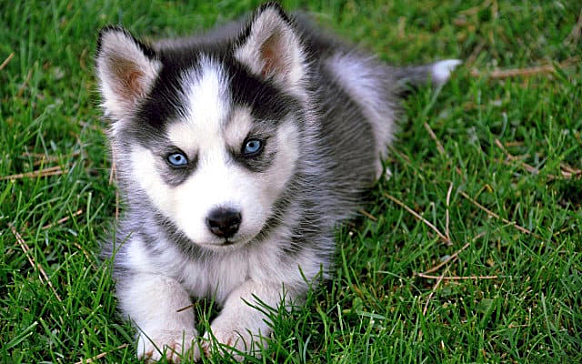
A “designer breed” for a dog means the intentional mixing of breeds to highlight the best characteristics of each parent. Even with more than two pure breeds in the bloodline, the lineage is identified. Qualities and personalities are more specific and people can pick the best characteristic of each.
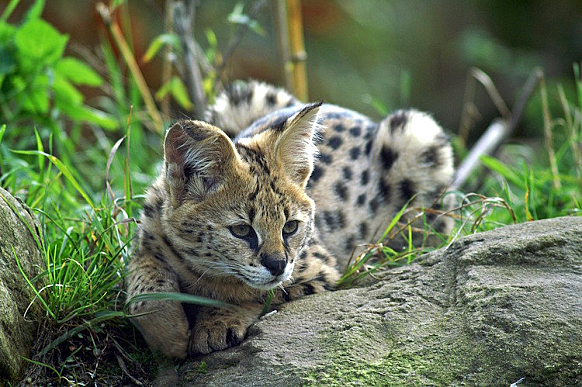
A “designer breed” for a cat is rare. These cats are expensive, and hard to find. Again, these cats are a blend of two or more natural breeds. Sometimes a natural gene mutation in the lineage can also produce a designer breed cat.
Designer cats are rare because they can cost at least $1,000. For example, the Savannah cat can average around $50,000 per cat. More exotic cats like the African Serval cat and the Asian Leopard cat go for $125,000 each.
“Designer” is not Hybrid
Hybrid is not the correct term for a designer breed. Hybrid means breeding between different species. The difference between hybrid and “designer” is in identifying the animal’s lineage.
Blending two bloodlines within a species is accurately called crossbreeding to produce designer dogs.
A mixed breed dog has undocumented parentage, and a crossbreed or “designer dog” has identified lineage from two validated breeds. That’s it.
Pros and Cons of “Designer Breeds”
Let’s talk about both sides of the “designer breed” dog story.
Here’s a list of pros:
- Selective breeding can produce dogs that have the best qualities of both parents. For example, Golden Retrievers have calm, friendly personalities, and Standard Poodles are non-shedding. So, a GoldenDoodle puppy can be very desirable.
- Crossbreeding is enhanced by genetics. Hybrid qualities can be stronger in puppies. But inbreeding can amplify weaker or recessive traits in a breed. Crossbreeding can improve a puppy’s gene pool compared to a mixed breed parentage puppy.
- Gene pools can be unstable. Results of the “designer” breeding may not be completely predictable. But results are more predictable than mixed parentage breeding.

And a list of cons:
- Supply and demand. “Designer breed” dogs are more expensive than many purebred dogs. Why are they expensive? Simple economics – quality and demand drives profit in the dog breeding business. For example, Doodles and other “designer breeds” are fairly recent (Puggles, Shepherd Chows).
- You can’t always get what you want. Size is another physical quality that is unpredictable. If a breeder does not carefully breed their dogs through multiple generations, the result can produce structural abnormalities. For example, an unnatural artificial insemination between a 70 pound Golden Retriever and a 4 pound Toy Poodle can produce short legs, long backs and other structural abnormalities.
- Caveat emptor (Let the buyer beware). “Designer breed” dogs are so popular that many less-than-reputable breeders, scammers, and puppy mills are selling them. Avoid being a victim of a scam – practice your pet parent due diligence. Talk to people, ask questions, and educate yourself. Here’s a great link for more info on reputable breeders.
- Size disparities. The larger the disparities between the two parents’ size, the more unpredictable the weights of their offspring. Without multiple generation breeding, a first generation “mini” GoldenDoodle can be large like the Golden Retriever parent.

Food for Thought…
Pet parents love their dogs and pick them for their personalities and physical qualities. Here’s some food for thought:
Breeding “improvement” in dogs can harm their long-term health and quality of life. For example, 100 years ago, the Bull Terrier was athletic and well-conditioned. Today’s Bull Terrier has a larger abdomen and skull and prone to extra teeth and compulsive tail-chasing.
The same is true in the English Bulldog. Over time, these dogs were bred for looks. Today’s English Bulldog is massive, breeding and mating happens only with medical intervention. And this poor dog’s median life span in 6.25 years.
Finally, the Saint Bernard is another example. 100 years ago, this breed was a wonderful, highly skilled working dog. Today’s version is supersized, with excess skin, and a pushed in face. And this dog is not a working dog because he overheats quickly and suffers from eye and eyelid problems, bleeding disorders and a spinal cord disorder called Stockard’s paralysis.
In May 2019, the Dutch government enforced a breeding ban on popular dog breeds. Years of deliberate “improved” breeding to shrink the muzzle to produce a “cute” squashed face-look have harmed several dog breeds.
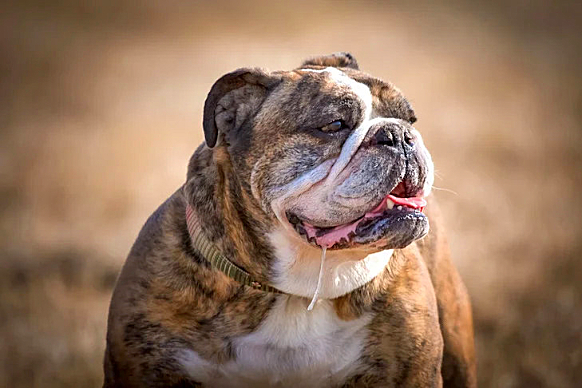
English and French bulldogs, Pugs, Pekingese and King Charles Spaniels suffer from excess soft tissue that blocks the throats and noses of these shortened head (brachycephalic) dog breeds. These dogs struggle from serious breathing problems.
As a result of the Dutch ban on brachycephalic dog breeds, the Dutch Kennel Club (DKC) decided to stop registering these breeds. Pedigree breeders worry that other governments will do the same.
But the American Kennel Club (AKC) and the global association of kennel clubs, Fédération Cynologique Internationale, accused the Dutch government of pandering to “anti-breeder agendas,” and “cheating hundreds of years of history”.
It’s a personal choice to buy a “designer breed” dog or cat.
I support Adopt, Don’t Shop and encourage people to open their hearts to homeless animals in a rescue or shelter.
Thanks for stopping by!
Dr. Pet Mom
“The best and safest way to learn about any kind of wildlife is to keep your distance and be respectful.”
–Ami Vitale
Book Update for November 2023
The month ran away and I had some technology challenges.
The good news is that I will publish my short ebook based on Dr. Pet Mom’s Delightful Pet Menagerie (DPM) Newsletter in December.
I’m very excited to share these updates with you!
“If there is a book that you want to read, but it hasn’t been written yet, you must be the one to write it.”
–Toni Morrison
A very interesting topic…thanks for posting!
Merry Christmas, Happy Holidays, and Happy 2024!
Thanks for your comment Lou. Merry Christmas and Happy 2024!