
Hello! Welcome to the December edition of Dr. Pet Mom’s Delightful Pet Menagerie (DPM) Newsletter. Let’s close out 2023 with a wonderful pet parent reminder: Your pet’s quality of life. Learn how you can prevent pet obesity and keep your pet healthy all year. Enjoy!
2022 Pet Obesity Survey
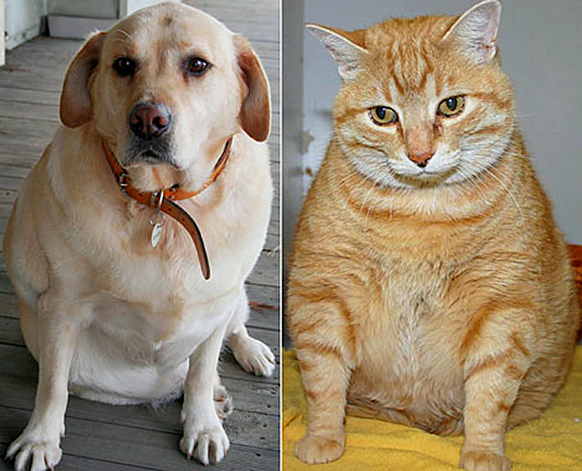
Do you know if your pet is obese? A 2022 State of Pet Obesity Report in the U.S. noted trends showing that our pets are steadily getting more obese: 61% of cats and 59% of dogs are overweight or obese.
Obesity is defined as a “multifactorial disease caused by excessive adiposity sufficient to contribute to disease.”
The Global Pet Obesity Initiative defined obesity as “30% above ideal body weight.” Excess body weight (overweight and obesity) reflect a range of metrics, including body mass index and abdominal size.
Other factors include your pet’s age, health condition, genetics, medication, activity level, and spay or neuter status.
Obesity can increase your pet’s risk of having these health conditions:
- Respiratory and skin problems
- Kidney or liver disease
- Diabetes
- Arthritis-related diseases (osteoarthritis, torn ligaments)
- Decreased life expectancy
- Heart failure
- Certain types of cancer
- High blood pressure
These types of non-communicable diseases (NCDs) are connect to your pet’s quality of life.
Of course, many social, environmental and lifestyle factors contribute to your pet’s contact with NCDs.
Diet and activity levels are tied to heart disease in cats, dogs, humans and other species. And the human-animal bond is motivated by behavioral habits to create positive health outcomes.
Pet Obesity: How it Starts
Weight gain in our pets happens the same way people gain weight: too much food, not enough activity and chronic illness.
Other causes of pet obesity include:
Genetics and your dog’s breed: Some breeds are prone to weight gain including American cocker spaniels, Basset hounds, Beagles, Cairn terriers, Cavalier King Charles spaniels, Dachshunds, Labrador retrievers, Norwegian elkhounds, Rough collies, and Shetland sheepdogs.
Heart or liver disease: Fluid buildup from these conditions can trigger weight gain. Large abdominal tumors can also make your pet look far.
Spaying or neutering: Neutering can affect your dog’s metabolism and energy level.
Is Your Pet Obese?
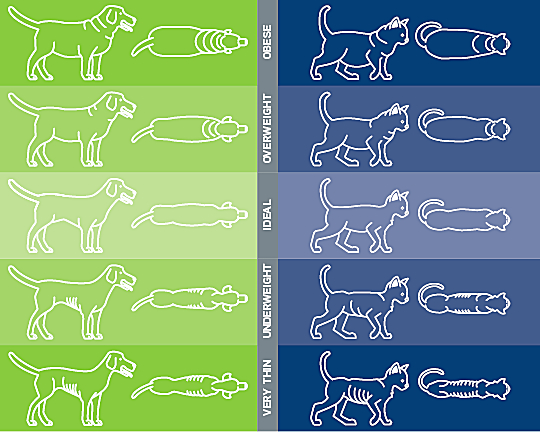
We see our pets every day. But take a close look to see if your pet is at a healthy weight:
- From above, look for a waistline.
- From the side view, see if your dog’s belly tucks up as she walks.
- You can feel your pet’s ribs without pressing hard on the sides.
Also, weigh your pet: Weigh yourself and write it down. Pick up your pet, get off the scale, record the combined weight of you and your dog. Then subtract your weight from the combined weight.
| Cat Breed | Female Weight (pounds) | Male Weight (pounds) |
|---|---|---|
| Domestic | 8-10 lb | 8-10 lb |
| Himalayan | 7-12 lb | 7-12 lb |
| Maine Coon | 10-15 lb | 15-25 lb |
| Persian | 7-12 lb | 7-12 lb |
| Siamese | 7-10 lb | 7-10 lb |
| Dog Breed | Female Weight (pounds) | Male Weight (pounds) | Height (inches) |
|---|---|---|---|
| Australian Shepherd | 40-55 lb | 50-65 lb | 18-23 in |
| Beagle | 20-22 lb | 22-24 lb | 13-15 in |
| Boxer | 55-65 lb | 65-80 lb | 21-25 in |
| Cairn Terrier | 13-16 lb | 14-16 lb | 9-10 in |
| Cane Corso | 85-100 lb | 90-110 lb | 23-28 in |
| Cardigan Welch Corgis | 25-34 lb | 30-38 lb | 10-13 in |
| Dachshund Standard | 16-32 lb | 16-32 lb | 8-9 in |
| Doberman Pinscher | 60-90 lb | 75-100 lg | 24-28 in |
| French Bulldog | 16-24 lb | 20-28 lb | 11-13 in |
| German Shepherd | 50-70 lb | 65-90 lb | 22-26 in |
| Great Dane | 110-140 lb | 140-175 lb | 28-32 in |
| Lhasa Apso | 12-18 lb | 12-18 lb | 10-11 in |
| Pembroke Welsh Corgis | 22-26 lb | 26-30 lb | 10-12 in |
| Poodle Miniature | 10-15 lb | 10-15 lb | 10-15 in |
| Retriever Labrador | 55-70 lb | 65-80 lb | 22-55 in |
| Retreiver Golden | 55-65 lb | 65-75 lb | 21-24 in |
| Rottweiler | 80-100 lb | 95-135 lb | 22-27 in |
| Shih Tzu | 9-16 lb | 9-16 lb | 9-11 in |
| Clumber Spaniel | 55-70 lb | 70-85 lb | 17-20 in |
| Yorkshire Terrier | 4-7 lb | 4-7 lb | 7-8 in |
The Cost of Pet Obesity
The 2022 report also stressed that along with your pet’s suffering and pain, pet parents struggle with greater economic costs.
Veterinary visits and emergency pet care are two examples. An estimated 20% of all pet insurance claims are point to obesity-related health conditions.
Here’s a sample of the financial costs for arthritis treatments (average cost in 2023):
- Physical therapy: $50-$75 per session
- Hydrotherapy: $30-$50 per session
- Arthritis medication: $10-$100 a month
- Nutritional supplements: $10-$70+
- Hip replacement surgery: $3,500 to $7,000+ per hip
Preventing Pet Obesity
If your cat or dog is overweight, try a few strategies for good health:
- Talk to your veterinarian for the appropriate food for your pet. For example, puppies need puppy formulated food, not adult dog food. Senior dogs need a different formula. And dogs with certain health conditions needs specific nutrient requirements.
- Think portion control at mealtime. Again, ask your vet about recommended portion size and stick to it.
- Pick a regular mealtime. Your dog is smart and knows when it’s time for food. Be consistent with regular mealtimes.
- Buy interactive feeding toys. Cats and dogs eat more slowly with interactive feeding toys and expend more calories.
- Don’t use a self-feeder for your pet. Manual auto self-feeders are a unlimited food supply. An alternative is an auto feeder that dispenses a fixed amount of food several times a day.
- Increase your pet’s activity level. Plan for 30 minutes of daily exercise for your dog, and three 5-minute play periods for your cat. Any activities that help your pet burn calories is good for both of you.
- Stay accountable to your vet teams. Schedule regular weigh ins to track your pet’s weight and overall health. You can also change any weight loss trends during your pet’s health assessment.
Other tidbits to consider:
- If your pet is begging for food, switch to playing a game. Or take your pet for a walk as a distraction. Take her mind away from food and focused on having fun with you!
- Give your pet fresh water instead of food. Dogs love fresh water. If their bowl is empty, fill it with fresh water.
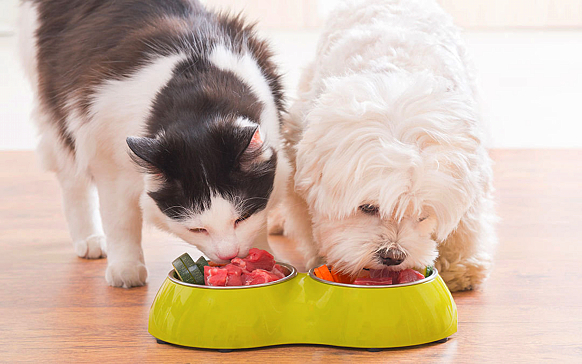
- Offer vegetables for treats. A crunchy snack of green beans, baby carrots, broccoli, celery or sliced cucumbers are tasty and healthy alternative for your dog.
- Frequent and small meals. Divide your pet’s total volume into four or six smaller meals. And save a last evening feeding for dogs who wake up early.
Closing Thoughts on Pet Obesity
Start the new year with the best gift that you can give your pet: A good quality of life.
Your pet relies on you to control their weight. Be aware of what and how much your pet is eating. The quality of your pet care includes keeping them healthy and happy.
Remember the best advice from holistic veterinarian, Dr. Karen Becker: “Animals live longer and with far fewer diseases if they achieve and maintain a healthy body weight. Period. So helping our loved ones diet down to a healthy weight is the kindest thing we can do for our pets.” End of.
Thanks for stopping by!
Dr. Pet Mom
“Pets understand humans better than humans do.” ~~Ruchi Prabhu
Last Book Update for December 2023
Sending your family best wishes and good cheer this holiday season!
After a few hiccups, I stepped back to help my family. The good news is that in January, I will publish my short ebook based on Dr. Pet Mom’s Delightful Pet Menagerie (DPM) Newsletter.
I’m excited to share these updates with you!
“Rainy days should be spent at home with a cup of tea and a good book.”
–Bill Patterson
A very informative newsletter…my two cats are “on the borderline” regarding weight, and this article provides some excellent suggestions. Thanks so much!