
Greetings! Welcome to the November edition of Dr. Pet Mom’s Delightful Pet Menagerie (DPM) Newsletter. This month is all about emotional support or comfort animals, therapy animals, and service animals. Read all about what makes these animals special. Enjoy!
Special Animals
2024 is winding down and it’s been a roller coaster ride of a year! As our emotions swing between highs and lows, we often look to animals to ease our stress.
If your emotions are disabling your health, a special animal can change your life. Here’s a overview of special animals who improve your quality of life.
Let’s talk about the differences between comfort or emotional support animals, therapy animals, and service animals. The differences range from formal training for a specific job to showing empathy when you feel stressed.
Emotional Support Animals (ESAs) or Comfort Animals
A comfort animal or emotional support animal (ESA) is a pet prescribed by a therapist, psychologist, or psychiatrist. A licensed mental health professional can decide if an ESA will help a patient with a disabling mental illness.
Your emotional support animal will simply provide comfort. Cuddling, sitting on your lap, or sitting by your side while you read are examples of emotional support from your pet.
How does a licensed mental health professional determine if a pet is an ESA?
A study from the University of New Mexico outlined the ethical challenges that health professionals face when asked to certify an emotional support animal for their patients.
Possible solutions include:
- Understanding, recognizing and applying the laws regulating ESAs.
The Americans with Disabilities Act (ADA) has no legal definition of an ESA so the ADA does not directly apply to or entitle the use of an emotional support animal.
The study explained that only two laws directly apply to the use of ESAs in public accommodations: (1) the Air Carrier Access Act (ACAA) which allows the ESA to accompany his handler in the main cabin of an aircraft at no extra charge, and (2) the Fair Housing Act (FHA) which allows the ESA to live with her owner in a housing unit that otherwise prohibits pets . The landlord must not impose a fee related to this special accommodation.
- A thorough valid assessment of the individual requesting an ESA certification.
The definition of “disability” can be confusing. The common use is defined by the Social Security Act (SSA) as the “inability to engage in any substantial gainful activity by reason of any medically determinable physical or mental impairment(s) which can be expected to result in death or which has lasted or can be expected to last for a continuous period of not less than 12 months.”
The main point is that the mental health professional identifies the patient’s condition as a formal “mental impairment,” not a casual opinion of a psychological condition.
- An assessment of the animal to ensure it actually performs the valid functions of an ESA.
The mental health professional’s assessment is a review of the temperament of the animal that meets the patient’s need for emotional support. For example, a dog may be calm and helping in a home setting, but nervous out in public.
The mental health professional should look for dogs that passed the Canine Good Citizen Test (CGC). The test looks a standard temperament in public
environments. A CGC-trained dog may be a requirement for homeowner’s insurance companies and landlords.
A professional animal trainer, animal behaviorist, or veterinarian can also help to assess the animal’s temperament.
- Observe the interaction between the animal and the individual to determine whether the animal’s presence has a positive effect on the patient.
The mental health professional should observe the individual and animal together. Comparing the patient’s condition with and without the ESA present can help determine how they respond to each other.
Therapy Animals
Therapy animals are another type of special animal. These pets are specially trained to help people with mental health issues.
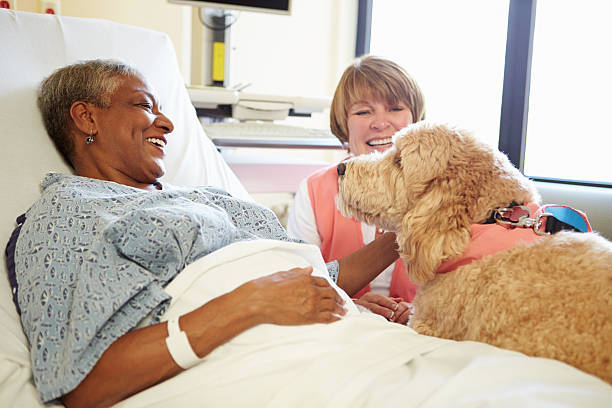
Just like ESAs, therapy animals provide friendship and emotional support. Therapy animals work in hospitals, rehab centers, schools and nursing homes.
The most common therapy animals are dogs and cats. But horses, birds, small animals and reptiles can also be therapy animals.
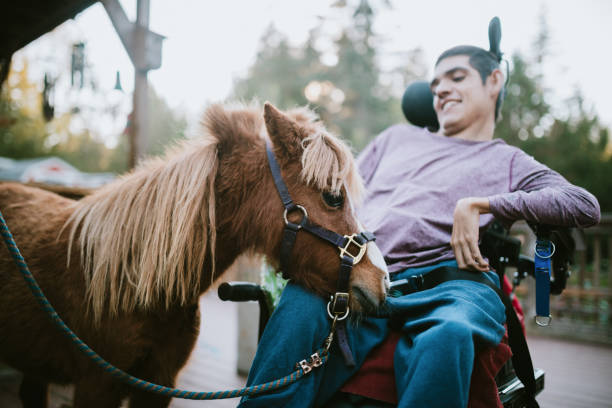
For example, horses provide equine therapy for mental health conditions and symptoms. Therapy involves caring, feeding and brushing a horse. These interactions can reduce loneliness and stress as the horse and patient create a bond. Equine therapy may or may not involve riding a horse.
Parrots are the most common therapy animal. Parrots help veterans struggling with post-traumatic stress disorder (PTSD). These birds are highly empathetic. Cockatiels are a type of parrot who love to sing when they want to be touched or held. They enjoy physical interactions and shoulder rides with their special human.
Parakeets are colorful and love to talk! These birds mimic sounds, words and can be taught to speak. Parakeets are very social and bond with their owners. Adopting a parakeet as a therapy animals can build a strong bond because they can live up to 10 years.

Doves are exceptionally intelligent and easy to hand train. They are gentler than larger birds and less noisy than parakeets. Doves are ideal as a low-maintenance ESAs. Their low and steady cooing sound is very soothing to many people.
Reptiles may not be thought of as soft and cuddly. But these therapy animals need patience and empathy. For example, the patient will need to feed and water a reptile and make sure that their habitat is temperature controlled. Reptiles can help children or adolescents in therapy become outgoing and friendly.
Small therapy animal include guinea pigs, rabbits, rats and mice. These small animals are popular as therapy animals to help patients focus during therapy sessions. Also, small animals can be carried around, taught tricks, and build confidence in their owners.
Service Animals
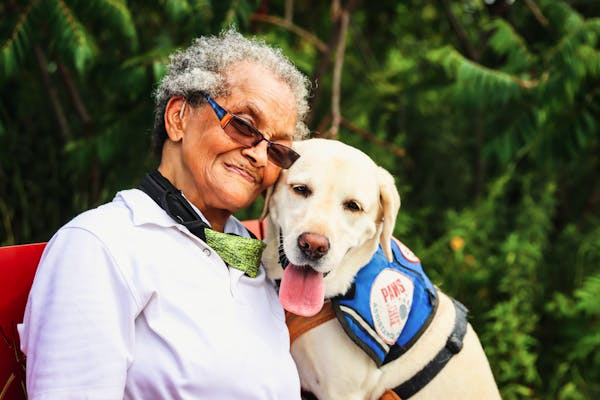
The Americans with Disabilities Act (ADA) defines a service animal” any dog that is individually trained to do work or perform tasks for the benefit of an individual with a disability, including a physical, sensory, psychiatric, intellectual, or other mental disability.”
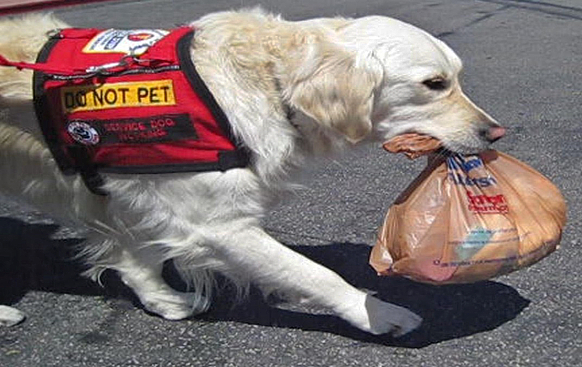
Work includes reminding a person to take medication, pulling a wheelchair, retrieving dropped items, alerting a person to a sound, or pressing an elevator button.
Based on the ADA definition, service animals are not emotional support or therapy animals. Service animals provide work directly related to a person’s disability, physical or otherwise.
Types of Service Dogs
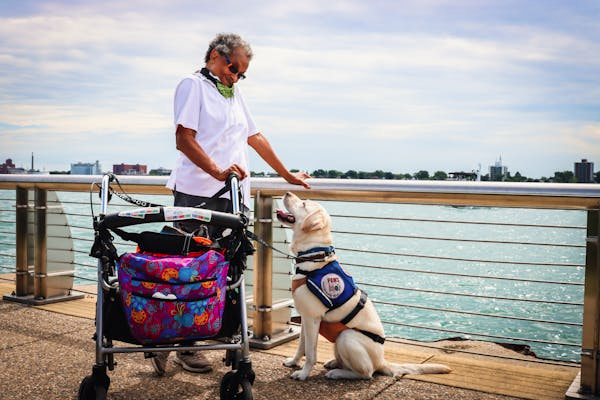
Service dogs can be trained for a variety of tasks. For example, there are mobility service dogs for wheelchair-bound people or people unsteady on their feet. These animals pull wheelchairs up the ramp or steady people walking in a crowd.
Service dogs for the hearing impaired alert their owners to telephones, ringing doorbells, babies crying, and oven timers. They paw or nudge their owners and lead their handlers to the source of the sound.
Psychiatric service dogs help people with PTSD, anxiety or depression. These dogs are trained to handle a variety of emotional and mental disabilities. For example, psychiatric service dogs are trained to be aware of their handlers and discourage them from becoming self absorbed by repetitive tasks or harming themselves intentionally.
Diabetic alert service dogs are trained to notice chemical changes in their handler’s blood sugar. These special animals can detect scent changes associated with hyperglycemic or hypoglycemic events in diabetics. The dogs can pick up on these changes and alert their people to blood sugar highs and lows before the levels become dangerous.
There are also allergy detection service dogs who detect the odor of things like peanuts, fish, or gluten. This detection can be lifesaving for people with extreme allergies.
Guide service dogs help blind or visually impaired people. These dogs are trained to avoid potential hazards inside and outside the home. The U-shaped harness these dogs wear lets the owner control the animal with directional commands. These dogs help their owners feel independent and secure in public.

Autism service dogs work to help this fairly common condition in 1 in 59 children in the United States. These service dogs increase an autistic person’s security and safety in their daily life. Autism service dogs are trained to comfort people during stress, reduce isolation, and keep children from running away.
Closing Thoughts
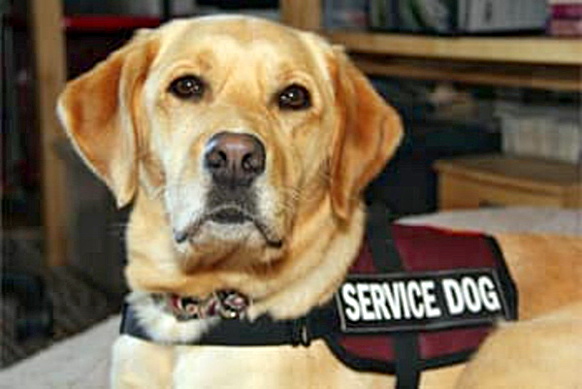
As much as I love dogs, I always respect them when they are working. I can only imagine how annoying it is to a disabled person when a stranger starts petting a working service dog, even when their are wearing a “Service Dog. Do Not Pet” harness.
Always respect the person and their service animal.If the dog is not wearing a “Service Dog” harness, at least ask if you can pet the dog first.
Thanks for stopping by!
Dr. Pet Mom
“Dog training is as much about teaching the owner as it is the dog.”
–Unknown
2024 Book Update
This year is coming to a close. And the best Christmas gift I can give to me, is to publish my book, Dr. Pet Mom’s Delightful Pet Menagerie (DPM) Newsletter. Sure, life gets in the way, but I’ve neglected one of the things I love, writing. My hard stop date is mid-December, just ahead of the Christmas holiday. One more final step to finish my book cover – that’s it. Final steps are in process. Thank you for taking the journey with me!!
Wonderful article, Dr. Pet Mom. I never knew about all of the different types of service animals, and the diverse services they provide…simply amazing!
Thanks for another wonderful year of educating, instructing, and interesting reading. Wishing you and Yours a very Merry Christmas and a Happy 2025!