
Hello! Welcome to the July edition of my latest project, Dr. Pet Mom’s Delightful Pet Menagerie (DPM) Newsletter. Outdoor fun for your pets means keep them cool and bug-free. This edition is about protecting your kitty from UV exposure and bug bites outdoors.
Are Indoor Kitties ‘Deprived’?
Cats might get excited about being outdoors in the summer. Some pet parents think their indoor kitties are being ‘deprived’ if they are not outdoors.
What does being ‘deprived‘ mean? That indoor cats are:
- Bored
- Destructive
- Overweight
These qualities are myths about indoor cats, and myths can harm your cat.
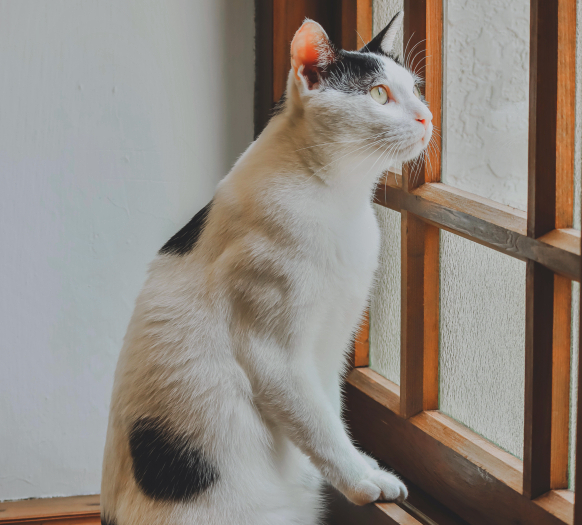
If you think your cat is bored, set up a window perch for him to sit and watch the birdies and squirrels outside. Cats love routines and a regular feeding schedule, playtime and exercise will control her weight.
Destructive behavior can be related to a health condition – talk to your vet. Or add more scratching posts, litter boxes or food hunting toys around your home.
Do you think indoor cats really feel the need to wander outdoors in the good weather? I don’t. My once-feral cat Oscar loves to be indoors with an occasional visit to the upper deck in the morning. He takes a snooze on the deck. But he knows that his days hunting for food outside, are over.
The MSPCA strongly recommends indoor living for your kitty. Your pet can avoid threats from predators, traffic or other animals. Keep your pet (and yourself) happy and safe indoors.
Insect Bites
Bee stings, parasites, tics and fleas await your cat when they spend time outdoors. She can be exposed to bacteria and viruses from wildlife and outdoor plants. Other dangers include snakes, neighborhood cats and dogs and strays.
Ask your veterinarian about a flea control program. Off-the-shelf products may be toxic and ineffective. Also vacuum and change your cat’s bedding to help control fleas.
First aid advice: Avoid treating cuts and wounds with ointments or topical antibiotics. Your cat might be allergic to some ingredients and will lick the ointment and irritate the wound.
And cats can have an anaphylactic reaction to insect stings. If your cat has swelling of her face, paws or legs, take her to the veterinarian immediately.
Be aware of any changes in your cat’s behavior and talk to your veterinarian.
Heatstroke
Hot temperatures can make anyone uncomfortable. Heatstroke is scary. If your cat is panting, similar to a dog, call your veterinarian immediately.
Or if you notice difficulty walking or lethargy, call your veterinarian right away.
You can cool down your cat with warm water (not cold) on her ears, paws and belly, then use the fan to mimic sweat.
According to Dr. Heather Loenser of the American Animal Hospital Association adds, “Cats, like dogs, don’t sweat to cool down, so this method of cooling by a veterinary team or pet owner will be appreciated by the cat. No matter what, go to your veterinarian for further care, even if your cat seems to be acting normally after being overheated.”
Animals at risk for heatstroke:
- Cats with kidney disease or asthma.
- Young kittens and older cats because they can’t regulate their body temperature.
Signs of heatstroke:
- Rapid pulse
- Body temperature above 104 degrees Fahrenheit
- Lethargy
- Sweaty feet
- Stumbling
- Vomiting
Book Update: Excerpt from Dr. Pet Mom’s Pet Parenting Guide

Each month, I will give you a special gift! When you sign up from my newsletter, I will give you a micro-excerpt from my latest book, Dr. Pet Mom’s Pet Parenting Guide: How to Enjoy the Love and Friendship of Your Senior and Special Needs Pets.
The book is planned to launch in summer 2022. Stay tuned for more details!
Please enjoy a short excerpt from my new book. Thank you!
Pet Life Stages
How much do you know about your pet’s life stages? Is your pet a juvenile or a young adult? What is one important habit you should develop for your pet’s quality of life?
You may have guessed that cats and dogs age differently. For dogs, aging depends on their breed, size and the shape of their face. And cats can live a long life. When you understand your pet’s life stages, you can improve their quality of life. Animals experience life through kitten or puppyhood, teen years, young adult, senior and geriatric years.
Understanding your pet’s life stages is helpful. But it doesn’t make it easier when they die, a reality for any pet parent. I adopted my first cat, Mr. Bean, as a kitten – as a young adult, he died much too soon. I would have loved for Mr. Bean to reach his geriatric years. But I enjoyed the time he spent with me.

Cat Life Stages (Kitten To Geriatric)
Life stage #1. Your pet’s kittenhood stage.
Life stage #2. Your pet’s juvenile years (six months to two years).
Life stage #3. Life stage #3 are the prime years for adult cats (ages 3 to 6 years). They are healthy and vibrant during this stage. Dental hygiene is important for cats at any age. You should learn to brush your cat’s teeth sooner than later.
Life stage #4. Mature cats (age 7 to 10 years) start to slow down and gain weight.
Life stage #5. Senior cats (age 11 to 14 years) are about 70 years old in human years. Try to maintain a regular mental and physical exercise routine.
Life stage #6. Geriatric cats (15 years and older) will experience behavioral changes (changes in litter box use, more vocalization). Schedule regular six–month veterinarian visits to detect health problems early.
Veterinary care is very important throughout your pet’s lifetime. Cats are very good at hiding illness and pain. So you must watch them closely. Keep a journal and track changes in your cat’s behavior (changes in stool and urine output, vision and hearing loss, mobility, sleeping and respiratory habits).
Dog Life Stages (Puppy To Geriatric)
Life stage #1. Your pet’s puppyhood stage.
Life stage #2. Your pet’s juvenile stage or teen years.
Life stage #3. Your dog is an adult at this stage (ages 1 to 7 years). Dogs become mature and independent adults. By life stage #3, smaller dogs may show signs of gum disease. Dental hygiene is important for dogs at any age. You should learn to brush your dog’s teeth sooner than later.
Life stage #4. Dogs are mature at age seven plus years. Most dogs are familiar with household routines. By life stage #4, pet care includes regular veterinarian checkups. Continue your pet’s routine of daily mental and physical activities. And watch her weight.
Life stage#5. This life stage begins the last quarter of your dog’s life. Again, his health depends on his breed and size. Expect to see changes in your pet’s eating, activity and sleeping levels. Hidden health conditions (arthritis, kidney disease) may appear. Regular six–month veterinary checkups and dental hygiene are more important as your pet ages.
Life stage #6. Your pet’s geriatric years are the final stage of her lifespan. Be happy when your pet reaches her life expectancy and is still active. You have been a great pet parent!
By life stage #6, your dog will slow down. She will also need your patience and TLC. You will need to age–proof your home with slip–resistant mats on slippery floors, ramps for stairs, and easy access to resting and sleeping areas.
So what is the ONE important habit you should develop for your pet’s quality of life? Learn to brush their teeth as part of your regular grooming routine. Remember to watch for changes in your pet’s diet. Older dogs eat less and will be more sensitive to temperature extremes.

I hope you enjoyed reading another excerpt from my new book, Dr. Pet Mom’s Pet Parenting Guide: How to Enjoy the Love and Friendship of Your Senior and Special Needs Pets.
Monthly Email Invite
I invite each of you to join my monthly newsletter email list and enjoy another update from Dr. Pet Mom.
My next book excerpt will explore another key to happiness for your human and furry family members.
Thanks for stopping by!
Dr. Pet Mom
“Cats are connoisseurs of comfort.”
–James Herriot
“Some days you’re the dog, some days you’re the hydrant.”
–Unknown
Sources: 6 Reasons You Might Let Your Cat Out, And Why Not To