Hello! Welcome to the January edition of Dr. Pet Mom’s Delightful Pet Menagerie (DPM) Newsletter. This month’s edition is about our fine feathered friends, pet birds. Learn how cockatiels and parakeets can live together. And how you can keep them happy!
Popular Pets
Do you know how many families in America are small animal pet parents? You can find small animals in 6.2 million American homes. And one source listed 8 types of small animals. I added fish at #9:
- Gerbils
- Rabbits
- Ferrets
- Guinea Pigs
- Hamsters
- Chinchillas
- Reptiles
- Birds
- Fish
Any small animal parent knows that their pets have their unique rewards, challenges, and caregiving needs.
Among the 20 most popular pets in the U.S., dogs (69 million U.S. households) and cats (45.3 million households) are at the top of the list.
Fresh water fish (11.8 million U.S. households) and birds (9.9 million U.S. households) are next at #3 and #4 in popularity.
Living Together: Cockatiels and Budgies
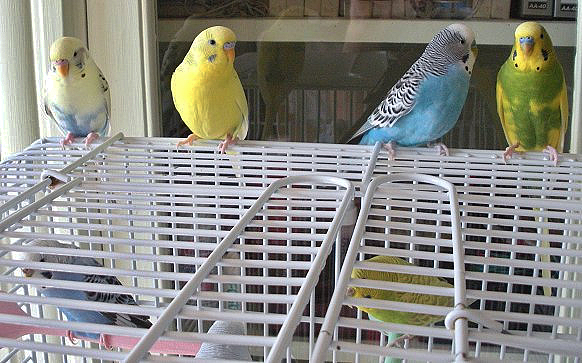
I am a happy cat pet parent and a bird pet parent. Our first cockatiel, Spudgee, was adopted in 2002 and is still with us. He now lives with his friend, Nog, a budgie.
Over time, we’ve had 16 birds, a combination for two cockatiels, one Black Capped Conure, and 13 budgies.
Yes, our house used to sound like a rain forest. Bird sounds were not the exotic type. Sounds were more like a cacophony of bird chirps, whistles, squeaks, warbles, squawks and generic bird noise.
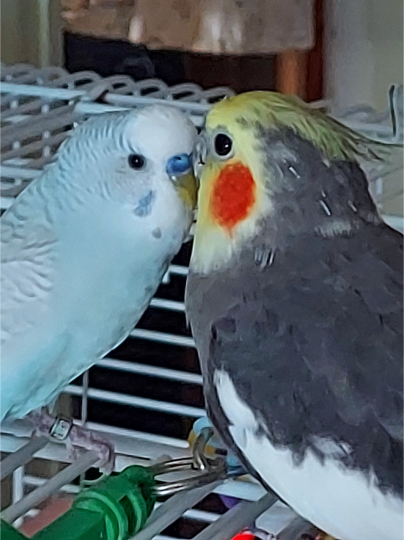
Today our two birds, Spudgee and Nog talk all day long. As two different bird species living together, they generally get along.
Nog was a youngster who grew up with his bigger brother, Spudgee. And of course, Nog likes to think he’s in charge. Nog likes to play, bite Spudgee’s feet when he’s outside the cage or chase him in the cage when he gets bored.
Spudgee and Nog love to sit outside the cage, fly around and stretch their wings. They scurry back inside when Oscar the cat takes notice. Oscar doesn’t chase them, but he is a master tracker.
Best Feathered Friends
Spudgee and Nog are best feathered friends. We weren’t sure if birds of different species could live together. But Spudgee never lived alone. And Nog was young enough to learn to live with another bird.
How do they make it work?
One source revealed that cockatiels easily accept other species. Start with a slow meet and greet. The birds may hiss and puff their wings but watch for violent behavior. Offer a sprig of millet to let them bond and calm down.
Remember that budgies and cockatiels have different nutritional needs. Cockatiels need large amounts of oily seeds like sunflower seeds. Budgies like a seed and grain mixture.
Budgies and cockatiels are smart birds. Their intelligence makes them interesting pets with their own personalities. Budgies can be social, shy or slightly aggressive. This behavior can influence the balance in the cage.
Spudgee and Nog make it work most of the time. Lately they’ve taken to flying in tandem around the room. Oscar loves to track them of course, another reason to supervise their out-of-cage flying time.
Celebrate National Pet Bird Day on September 17!
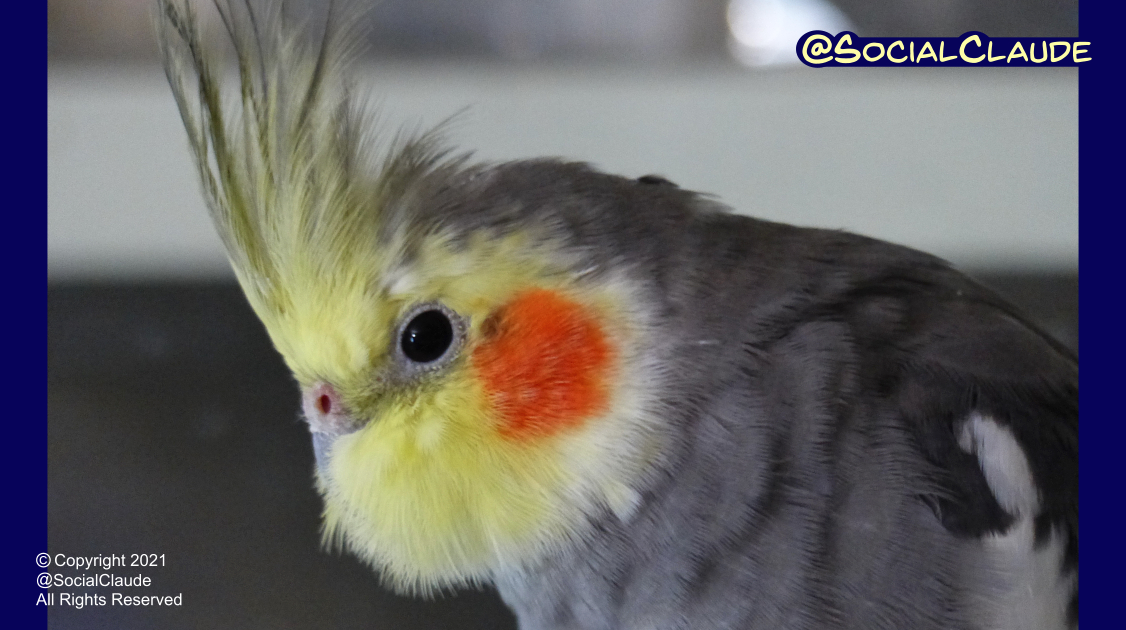
Celebrating Cockatiels
Cockatiels are small species of parrots. They’re sociable, have an easy whistle, and love your attention.
A healthy diet, TLC, and removing toxins from your home, can ensure that your pet can live up to 30 years.
For all you bird pet parents, here’s some fun facts about your cockatiel friends.
- Some Cockatiels Can Talk.
Cockatiels can mimic noises they hear regularly, including an alarm call at any time. Whistles, warbles and chirps are their most common sounds.
Your cockatiel is likely to make noises when you leave the room. They want to know when you will return. Whistle back to put your bird’s mind at rest.
- Males Look After Their Young.
A unique quality of cockatiels is that they share parenting responsibilities. After the chicks are born, the male stays around to ensure the safety of the young.
Males can be more loving and nurturing than the female. They will fight off predators. The young need both parents for the first 12 weeks of life.
- Your Cockatiel’s Mood: Watch The Crest.
Your cockatiel’s head crest is more than just a decoration. The shape and movement of the crest is a sign of your bird’s mood.
- Pointing straight up: Curiosity or happiness. Look for signs of being calm.
- Flat and close to the head: Anger or ready to swing upside down.
- Relaxed and resting position: Ready to sleep.
- Straight up but relaxed: Excited and ready to hop and whistle.
- Brushed out crest feathers: A sign of happiness when the crest looks like a badminton shuttlecock. Your bird is ready to sing and whistle.
- Cockatiels Get Depressed.
As we know, animals get depressed. Give your cockatiel a mirror, one of their favorite toys.
Your bird can become depressed if left alone or if they get bored. This little bird is very intelligent and thrives on mental stimulation.
Mood changes include less activity, eating less, aggression, fluffed up feathers, and changes in vocalization.
- Cockatiels Are Prone to Airborne Toxins.
Do you know that your cockatiel is highly susceptible to airborne toxins?
Smells from cigarette smoke, burned Teflon, essential oils, candles, room fresheners, household chemicals, or perfume can harm your birds and other small animals.
Several years ago, we dumped any Teflon-coated pots and pans for steel, glass, and copper-bottom cookware. Today we use plant-based cleaning products and laundry detergent.
Celebrate National Cockatiel Day on May 19!
Celebrating Budgies
One source listed budgies as the most popular pet birds all around the world, especially in the UK. These beautiful and social parrots are attractive to many people. Budgies can live from 7 to 15 years.
For all you bird pet parents, here’s some fun facts about your budgie friends.
- There Are Two Varieties of Budgies.
Budgerigars are scientifically known as Melopsittacus undulatus. Budgerigars are known as budgies.’Melopsittacus‘ means ‘melodious parrot,’ and ‘undulatus‘ means scalloped wings.
And in some areas, budgie are called undulated parakeet, warbling grass parakeet, canary parrot, zebra parrots, parakeets, and shell parrots.
The two distinct budgie varieties are 1) Budgerigars, born in Australia, and 2) English Budgies, bred in England specifically for show and pets.
English budgies are bigger, and Budgerigars are more like the unique wild variation of the breed.
- All Budgies Are Parakeets, But Not All Parakeets Are Budgies.
Parakeets are a type of parrot. Budgies are a type of parakeet species native to Australia.
Budgerigars are smaller and have a shorter lifespan. Parakeets like rose-ringed parakeets, monk parakeets, or sun parakeets, can live up to 30 years.
With 115 parakeet species, it’s hard to differentiate a budgie from a parakeet. And culture, language and specific parakeet qualities can be confusing.
- Basic Budgie Colors.
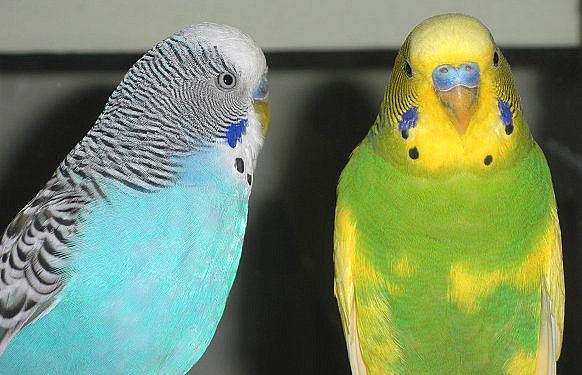
Green and yellow are the budgies original colors. Other colors developed from these two basic colors. Yellow is bred from a genetic mutation.
The first budgie with blue colors was first seen in 1878, but nobody has seen that again.
Budgies have at least 32 primary mutations, which allow for hundreds of possible secondary mutations and colors!
- Budgie Anatomy.
Color is important in determining the gender of a budgie. Adult males have blue ceres (nose), while females have pink or brown ceres.
Budgies have a third eyelid that is not clearly visible. It’s important to keep their eyes clean from dirt and debris. You might see that third eyelid while cleaning your bird.
Budgies have highly acute vision. They can register over 150 images per second. Humans only register 16 images per second.
Budgies can hear in the range of 400-20,000 Hz. They can also remember and mimic many sounds.
Budgies have a high resting respiration rate, ranging from 65 to 68 times per minute, a budgie breath.
And their heart rate is very high. A budgie heart beats 300 times a minute, many beats for such a small bird!
A budgie can have more than 3,000 feathers on its body.
Budgies grind their beak when they feel happy and relaxed. This habit is similar to cats purring.
Budgie can only afford to lose 11 to 12 drops of blood.
- Talking Budgies.
These small birds are among the most vocal of all pet birds.
Budgies can say a couple of words. They have a more unique vocabulary and clear voices than most other pet birds, including the cockatoo and macaw.
- Big Parrots And Budgies.
Budgies used to be thought of as a small type of parrot. But the smallest parrot variety is called a Parrolet. In truth, there is little difference between a huge Parrotlet and a little budgie!
Celebrate World Budgie Day on March 17!
– photo by @SocialClaude
To learn more about your pet birds, visit the National Audobon Society or the American Birding Association.
Thanks for taking care of our feathered friends!
Book Update for 2023

Editing continues! My graphic designer is creating more pictures. I’m listening to the sound of my book and reading it aloud from cover to cover.
The book is planned to launch in early 2023. Stay tuned for more details!
Thanks for stopping by! Best wishes to all in 2023!
Dr. Pet Mom
“No time on earth is long enough to share with the animals we love, or prepare our hearts to say goodbye!”
–Unknown