

Pet parenting might seem like a no brainer. We love our pets. We want to keep them safe, happy and give them a good quality of life. But do you know the basics of pet parenting? Do you know the most common pet parenting mistakes? Are you hurting your doggy by teasing, punishing and leaving her alone for too long?
Common Pet Parenting Mistakes
Sure, it’s easy to think that pet parenting is common sense. But our best intentions can sometimes harm our pets.
Let’s review a few common pet parenting mistakes.
1. Crate punishment: You may think that your pet needs a time out and use the crate for punishment. Not a good idea.
Crate punishment leads to confusion and animosity. Your dog will learn to resist going inside the crate. Confusion will increase her stress level when confined to that space.
Dogs are smart, but they don’t understand time out punishment. A better solution is to train your pet and discourage bad behavior when it happens.
Pet parenting basic: Use the crate as a training tool for your dog’s fun space and resting haven.

2. Taking away food and toys: Really? If you’re setting clear boundaries for your dog, taking away food while they’re eating can lead to aggression.
The same thing can happen with toys. Teasing to show you are the alpha can frustrate your dog.
Your dog will be confused at meal time or play time. And he will see you as a bully, not the alpha member of the pack.
Pet parenting basic: Let your dog enjoy play time and eat in peace.
3. Leaving your dog alone for too long. Dogs love company and spending time with their families. With little socialization, dogs become stressed, bored, sad, and destructive.
If you have a busy schedule, remember to make time for your dog. Think about your dog’s mental, emotional, and physical health.
Ask other dog parents for a good doggy daycare or dog walking service to break up your pet’s day. Keep your dog happy and healthy with daily socialization.
Pet parenting basic: Give your doggy daily companionship for a long and healthy life.

4. Too much yelling at your dog. No one likes to be yelled at all the time. And yelling at your dog will cause distress and she won’t trust you.
Your dog does not understand the language of yelling. It’s your pet parent responsibility to teach your dog basic commands and good manners.
And consider that if you yell a lot, how will your dog know you’re serious in case of an emergency? It’s like crying wolf – your dog will stop listening to you.
Pet parenting basic: Be kind to your doggy. Skip the yelling and reward only good behavior.
5. Walking your dog on a leash, not a harness. You may think that a leash is good enough to walk a dog. But tugging and pulling on a leash can injure your dog’s larynx, neck, and spine.
A harness gives you better control with less dragging and pulling. And it helps you and your dog enjoy walking together.
For older dogs who have trouble walking, a harness is a wonderful tool to help him navigate steps, or lift him up to his feet.
The best reason to use a harness is for safety. Your dog can quickly wiggle out of a leash – it’s harder to escape from a well-fitting harness.
If your dog is trying to escape when you’re walking, you’ll notice it quickly and regain control.
Pet parenting basic: Think safety first. Use the harness as a training tool for basic commands (“Stop”. “Heel”. “Walk nicely.”).
6. Forcing your dog to make friends. You know it’s important for your dog to be social and learn to play with others. Watch for your dog’s “calming signals” to see if they’re ready to make new friends (other dogs and humans).
What are “calming signals?” Look for these behaviors:
- Head turning
- Yawning
- Lip licking
- Averting gaze
- Blinking
- Crouching low to the ground
Each behavior is your doggy’s way to slowly ease into a calm and peaceful interaction with other dogs.
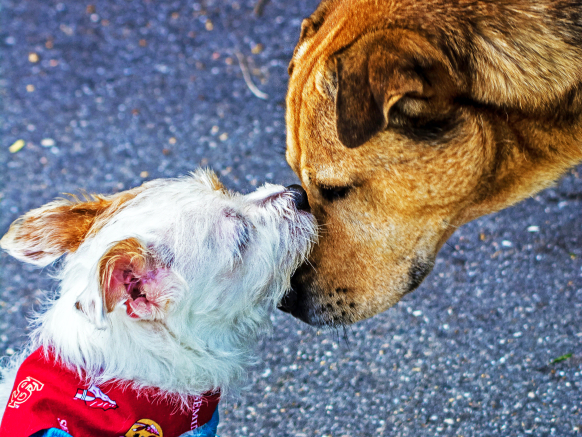
When it comes to meeting strange people, beware of the “sniff test.” You know the sniff test – it’s when people reach a hand out to pet your dog.
The sniff test is ABSOLUTELY the wrong thing to do when approaching a strange dog. It puts your dog on the defense – she doesn’t have time to assess the danger. She might run away, snap or bite the hand of a stranger.
Pet parenting basic: Let your dog make the first move. If she wants to meet a stranger, she will walk forward and sniff them.
And always keep control of the situation – if your dog is not showing any “calming signals,” don’t let a stranger touch her.
Pet parent basics are easy to remember. Use your common sense and pay attention to your dog’s behavior.
Sources: 5 Ways You’re Crushing Your Dog’s Spirit Without Even Knowing, The Human “Sniff Test” Is Not The Preferred Introduction For Dogs, Look For These “Calming Signals” When Your Dog Is Meeting New Friends, 4 Reasons To Use A Dog Harness
Thanks for stopping by!
Dr. Pet Mom
“Dogs have a way of finding the people who need them, and filling an emptiness we didn’t ever know we had.” ~~ Thom Jones