Greetings! Welcome to the May edition of Dr. Pet Mom’s Delightful Pet Menagerie (DPM) Newsletter. Hope you’re enjoying the spring weather.
May is Adopt A Horse Month celebrated by the American Society for the Prevention of Cruelty to Animals (ASPCA). Groups like the American Horse Council promote and highlight the need to find loving homes for horses, donkeys and mules across the country.
May is also my two-year anniversary as a volunteer at the horse farm. This special edition is all about some cool things I’ve learned about horses. Enjoy!
Our Love for Horses
Let’s start with the basics: We love our horses. Horses are considered man’s second best friend.
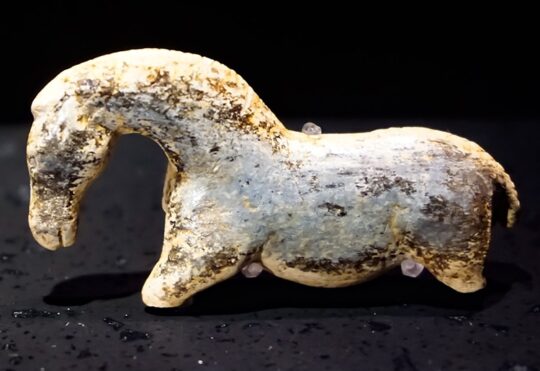
We have loved horses since the first artifact was discovered 40,000 years ago. A primitive human used a mammoth ivory to carve the ‘Vogelherd horse‘, an exquisite two-inch artifact.
The carving captured the muscular power of the stallion, the arch of the neck, and the slightly cocked head the “gives the animal the requisite air of contemplation.”
The simple answer to why we love horses: Freedom.
Walking or riding a horse keeps us outdoors and they don’t make loud mechanical noises. Simply standing next to a horse is a powerful feeling. The power to be still, to touch their coat, rub their neck and to feel connected to another living being.
And people treat their horses like children- I see it when I volunteer at the horse farm. Some people their ride horses daily before work, others ride several times a day. Treats, loving hands, gentle voices, and TLC keep these horses happy. Clearly, horses are loved.
Horse Sense
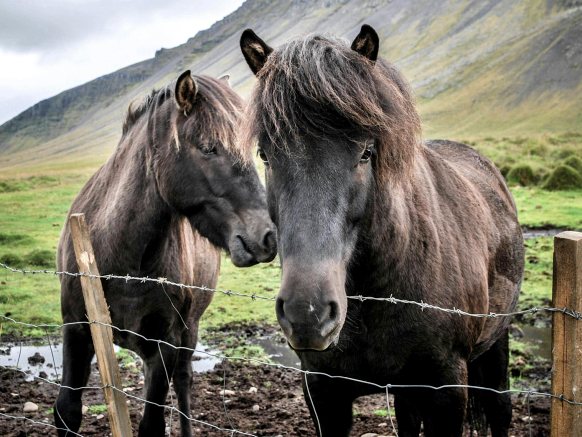
The phrase “horse sense” means good common sense. Horse sense to a horse, is using their sight, hearing, touch, smell and taste to understand the world.
But horse sense also means their sense of you. They respond to your feelings, your micro-expressions, and your thoughts. A horse’ emotional intelligence is deep and sensitive.
Horses show their emotions with their eyes, ears and nostrils. A horse will mirror who you are and what you’re feeling: Your tension is their tension. Your fear is their fear.
Many of us don’t fully know who we are or what we want. Our longing for unconditional love and childhood traumas are carried into adulthood.
A horse needs to feel your genuine self – the real you, unmasked not artificial. A horse wants to encourage you to be present, to feel the moment with them. They will naturally accept you just as you are.
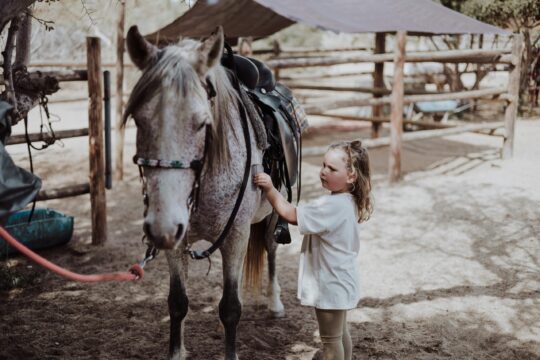
Healing Ways: Stand and Listen
And yes, horses help us heal. By simply standing quietly next to a horse can be a calm and connected feeling.
Again, you are accepted for who you are. As social animals, horses are keen observers and their empathy is to feel what you feel.
Being with a horse who chooses to engage is like stepping into a living mirror of unconditional presence. You experience, even briefly, the belonging and safety of the herd. It is in this shared, voluntary presence that true healing flows effortlessly.
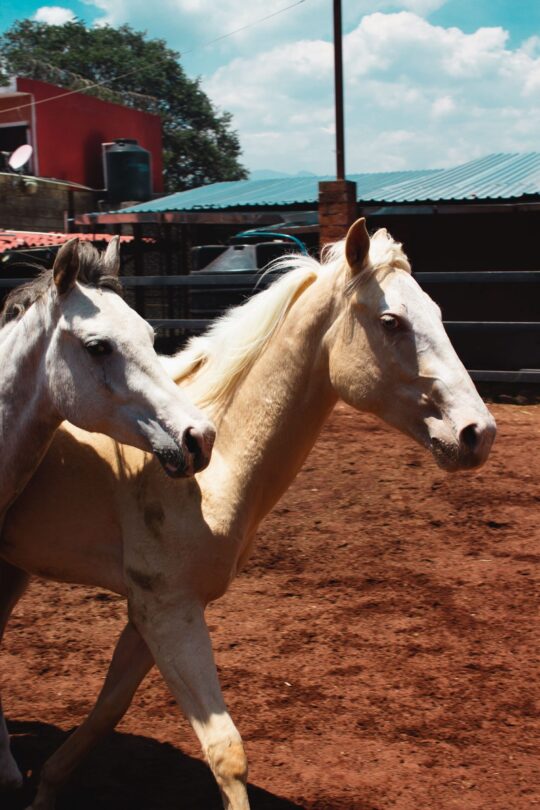
Masks don’t work with horses. They invite the real you, your presence, your emotions, your truth, or nothing at all.
Horses mirror our fears, childhood trauma, and longing to be loved with gentle clarity. They respond to authenticity and choice. Horses guide us toward embracing our true selves without pretense.
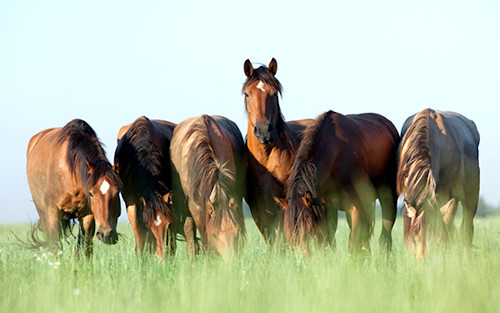
More Cool Things About Horses
Here’s a list of 20 really cool things about horses!
- Horses help with mental health. They teach us respect, communication, love, trust and build our confidence. Equine Assisted Therapy is a popular treatment for a variety of mental health issues.
2. Horses drink lots of water. On average, a horse needs to drink between 5 and 10 gallons of water each day. Colic (abdominal pain, gas) is a common and potentially life-threatening condition in horses. They should be well hydrated to avoid getting colic.
3. Male horses have more teeth than female horses. Most male horses (stallions, geldings) have 44 teeth while female horses (mares) have between 36 to 44 teeth when fully grown adults.
4. Horses have unique vision. They have both binocular (both eyes) and monocular (one-eyed) vision. Each eye sees different images to scan large areas. Their binocular vision focuses both eyes forward for depth perception. They have excellent wide angle view, a blind spot directly behind them, and very poor vision directly in front of their faces.
5. The Quarter Horse is the most popular horse breed. The American Quarter Horse is considered the most popular horse breed in the United States, followed by the Thoroughbred and Arabian.
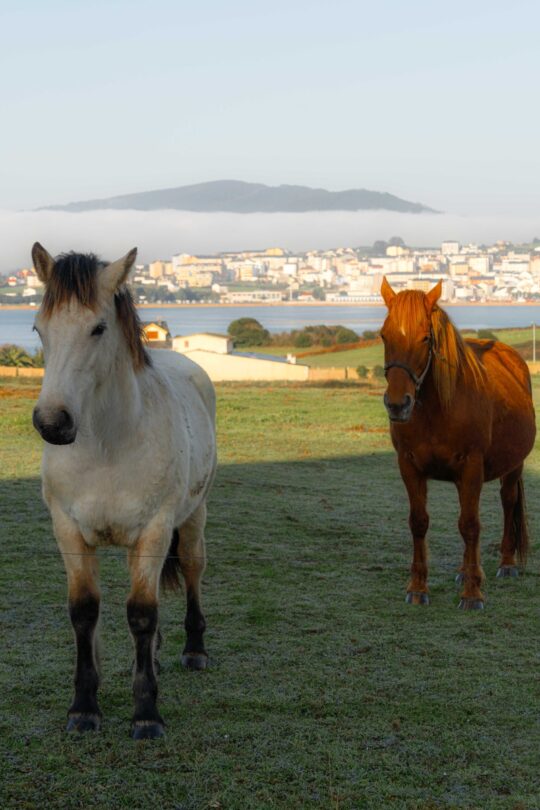
6. The smallest horse was less than two feet tall. Thumbelina, a miniature sorrel brown mare, holds the Guinness World Record as the world’s smallest horse. She was only 1 foot 5 inches tall and weighed the same as a medium-sized dog.
7. A horse’s mane helps regulate body temperature. It also protects against flies, rain, sun, and from attacks from competing stallions. While domestic horses have long manes resulting from breeding, feral horses have shorter manes.
8. The world’s biggest Horse weighed 3,360 pounds. Sampson, a Shire horse in Bedfordshire, England, holds the record as both the tallest and the heaviest horse known to man. Sampson stood at 86.5 inches tall.
9. Horses can see in two different directions. A horse’s eyes can work independently of each other and focus two things at the same time! The best way to tell what your horse is looking at? Watch the ear on the corresponding side.
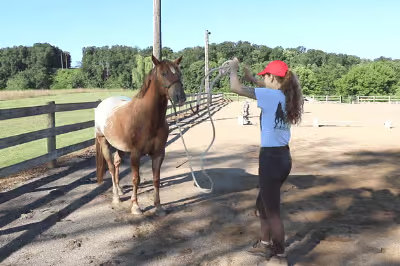
10. The longest horse tail was over 12 feet long. The Guinness World Record is held by Summer Breeze, with a tail measuring at 12 feet 6 inches long. And horses’ tails can swat up to 60 flies per minute.
11. Horses can sleep both standing up and lying down. They have a unique locking mechanism in their legs. An average nap for a horse if 15 minutes of sleep and older horses only require around 3 hours of sleep in 24 hours.
12. Horses can run shortly after birth. The top speed of the average horse is around 30mph, the fastest horse ever recorded sprinted to 55mph.
13. The average horse lifespan is 25 to 30 years. But genetics, environment and nutrition can influence longevity. Ponies can outlive larger horses, with some reaching well into their 40s.
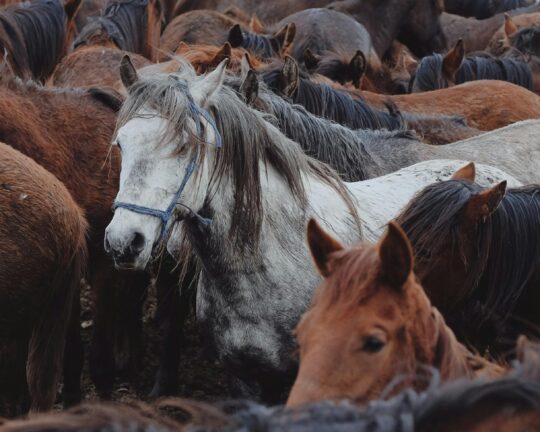
14. Horses have exceptional memories. These highly intelligent animals recall locations for water and shelter, and memory is a critical survival trait to avoid danger. Due to their social nature and reliance on non-verbal cues within their herd, horses can easily recognize and interpret human emotions.
15. Horses have only one bone less than humans. Horses have 205 bones, humans have 206. This similarity in bone count is intriguing, considering the vast differences in our bodies.
16. Rhinos and horses are related. Both horses and rhinos belong to a small group of odd-toed ungulates called Perissodactyla. Zebras, donkeys, and the Brazilian tapir are in the same group.
17. There are over 400 horse breeds. World wide, there are more than 400 different breeds of horses. Horse breeds developed for tasks such as plowing fields, pulling heavy logs and performing intricate dressage movements.
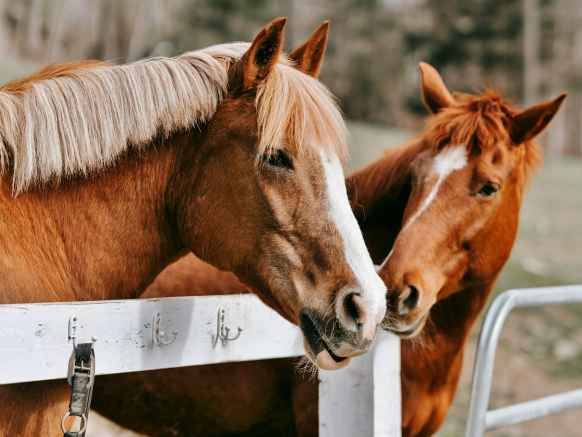
18. Horse breeds are classified into five main categories:
- 1) Hot-blooded are agile and fast horses like the Thoroughbred and Arabian.
- 2) Warm-blooded are versatile and balanced for show jumping and dressage like the Dutch Warmblood and Hanoverian.
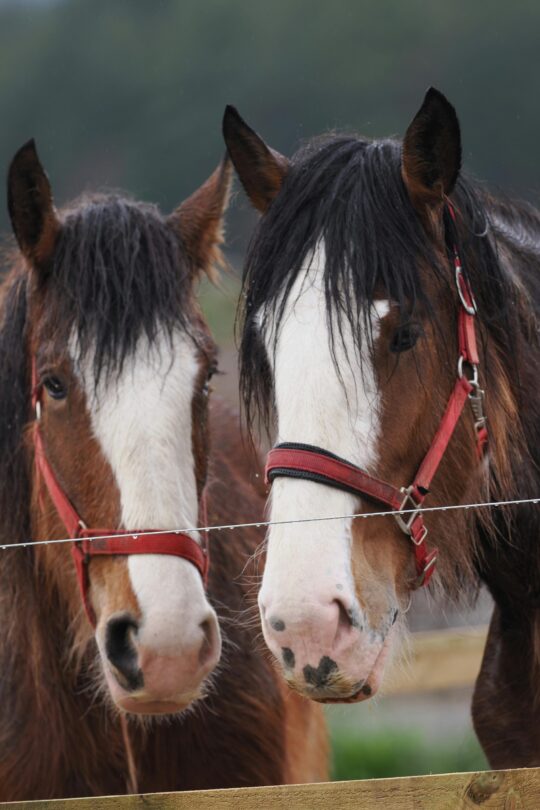
- 3) Cold-Blooded are large, gentle horses suited for heavy work like the Clydesdale and Percheron.
- 4) Ponies are small horses measuring less that 14.2 hands (58 inches) in height such as Shetland Ponies, used mainly for light draft work or children rides.
- 5) Miniature Horses stand under 38 inches tall and resemble full-sized horses. They can be companion animals or service animals.
19. Horses have unique whorls and patterns similar to human fingerprints. Each horse has a unique pattern of hair whorls (also known as cowlicks) on their forehead and neck. In some cultures, the placement and direction of whorls indicate a horse’s temperament and personality.
20. Horses need to eat frequently for good digestive health. They can spend from 16 to 18 hours a day eating and their digestive systems are adapted for a steady intake of food. Without food for even a few hours can lead to discomfort and digestive issues and damage the stomach lining.
Closing Thoughts…
My weekly visits to the horse farm are very relaxing. We enjoy just being together, like old friends. They are curious and gather around me when I’m cleaning or watering (and to try and grab a treat from my pocket!).
While I feel calm around these big animals, they also know that I respect them. No sudden moves, loud noises, just a calm voice and gentle touches as I walk by.
We’re all busy, but you also deserve a break. Find a weekend to visit a horse farm or sanctuary and meet a new friend! You won’t regret time spent with horses.
Thanks for stopping by!
Dr. Pet Mom
“A horse in the wind – a perfect symphony.” ~~ Unknown