

Hello! Welcome to the July edition of Dr. Pet Mom’s Delightful Pet Menagerie (DPM) Newsletter. This edition is about summer safety tips for your horse, goat or chicken. Enjoy!
One of the highlights of my week is volunteering at a nearby horse farm. And I bring treats for each horse, goat and chicken. I wondered how these special animals can live together.
According to the livestock compatibility table, horses and goats get along because:
- Both are herd animals and don’t compete with each other.
- Both are herbivores and enjoy grazing together.
- Goats have a real calming effect on horses.
Horses and chickens get along because:
- Chickens eat and control bugs. They eat eggs, larvae, rodent nests and ticks.
- Chickens scratch around compost piles and eat bugs and worms.
- They clean up after a horse spills his feed. Chickens each tiny grains so that there is nothing left to attract rodents.
It’s summer and let’s talk about keeping these livestock cool in the hot weather.
Summer Safety for Horses
Summer time brings its own challenges to people and animals of all sizes. But unlike smaller companion animals, horses face complex risks.
Horse owners need more proactive management strategies to keep their horses happy, safe and cool in the heat.
Examples of complex risks include:
- Overweight or unhealthy horses.
- Little access to water or shade.
- Horses with thick winter coats that have not shed out.
- Working hard in high heat and humidity.
- Horses not acclimated to hot weather.
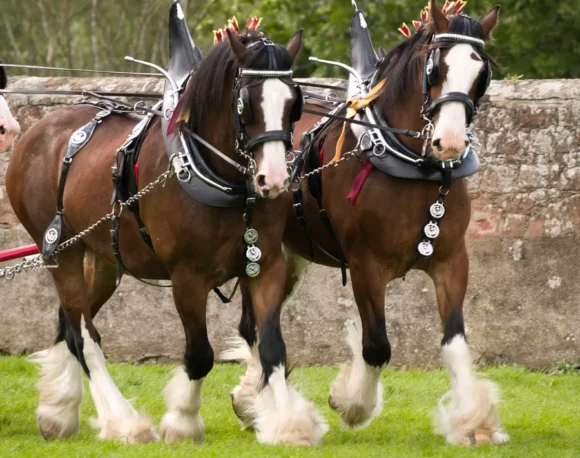
Proactive Management
The smart and proactive management for horse owners is to modify work and exercise activities.
For example, avoid hard work during peak heat hours. Ride or train during early morning or late evening, and allow for longer warm-up and cool-down periods.
These timing strategies are important to keep your horse from overheating or suffering from heat stroke.
Another strategy includes the fitness of your horse. Monitor your horse during the early hot days of summer, and allow 2-3 weeks for heat acclimation. Always ensure that your horse is fit for working in the heat.
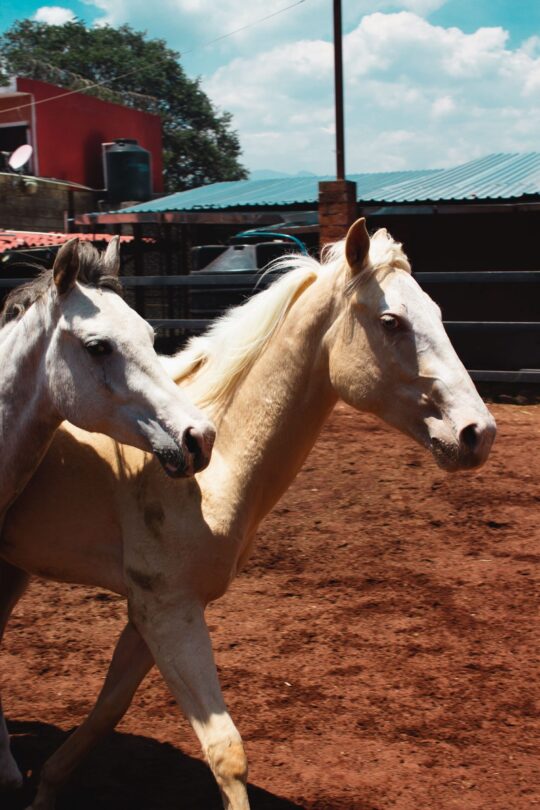
Signs of Heat Stroke
After a ride or workout, walk your horse until their breathing and heart rate normalize. Hose them with cool water (not ice water) right after their workout. Use sweat scrapers to remove excess moisture from their coat.
You should know the signs of heat stroke as well. Like cats and dogs, horses cool themselves through sweating.
When their internal cooling system is overworked, heat stroke is fatal and happens quickly in horses. Heat stress signs include:
- Temperature above 103°F is a worry, and temperatures of 105°F or more requires immediate veterinary care.
- Lethargy and reluctance to move.
- Excess sweating that suddenly stops.
- Rapid breathing and heart rate that does not normalize after 20 minutes after exercise.
- Dry, tacky gums indicate dehydration.
If your horse has any of these signs, call your veterinarian, move your horse to to shade, apply cool water (again, not ice), and use fans for more circulation in the stall.
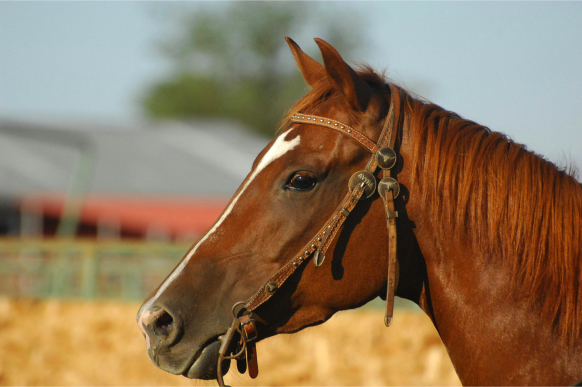
Hot Weather Tips
The best summer safety tips for your horse are pretty simple.
Provide shade from from trees, shade sails in paddocks or run-in sheds in pastures.
And remember to provides lots of clean, fresh water at all times. Electrolytes to their water supply will replace lost minerals in hot weather.
Finally, watch your horse closely for heavy panting, excess sweating, weakness or any sign of heat stress.
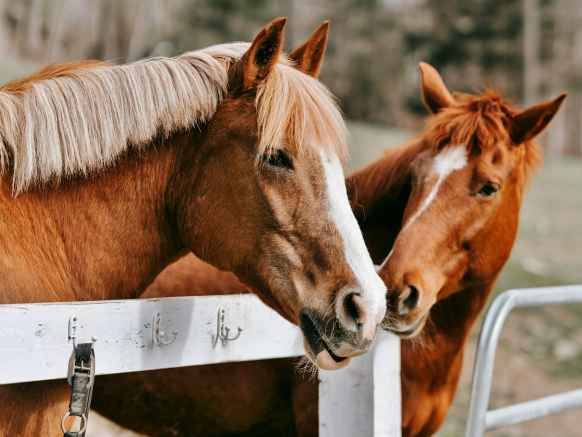
And let’s not forget health risks from insects. Flies carry diseases that cause summer sores from parasites in fly bites, and West Nile Virus from mosquitos.
Flies can transmit diseases, which may cause behavioral changes that can lead to injury and create significant stress in horses.
Summer safety includes daily manure removal from stalls and eliminating standing water areas from paddocks and other water sources.
Also install fans in barns (flies can’t stand moving air), use fly sheets or masks with UV protection, or apply a fine mesh screen in stalls.
Summer Safety for Goats
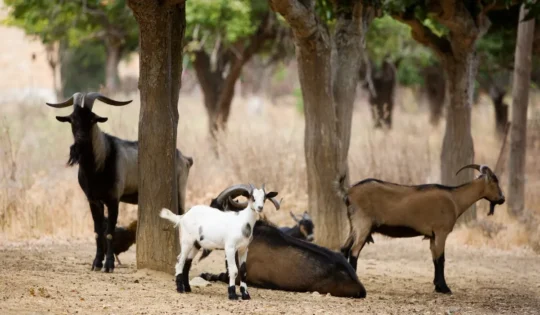
If you have goats as your livestock, shade and plenty of water will keep them happy.
Generally, goats can regulate their body temperature. But temperatures about above 105ºF can cause heat stress.
Similar to horses, signs of heat stress include weakness, loss of appetite, inability to stand, continuous panting and rapid breathing.
Keep your emergency goat first aid kit nearby and well-stocked with:
- A reliable thermometer
- Antiseptic
- Wound care supplies
- Electrolyte packets
- Veterinary contact information
Heat and Humidity
Of course, summer heat is a problem, But humidity is just as dangerous.
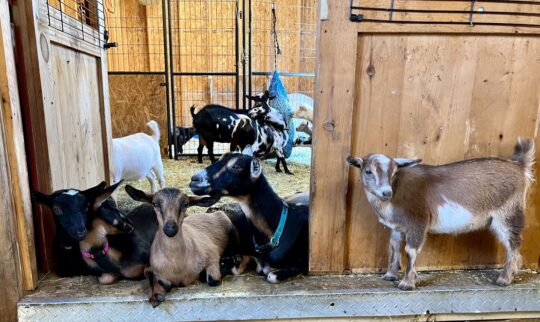
Damp, humid conditions provide a breeding ground for hoof rot, bacteria and internal parasites. Keep your goat stalls clean with fresh, dry and clean bedding.
A simple idea is to fill empty bottles of water and freeze them. Put the frozen water bottles in the water trough to keep water cool and fresh. Goats can also lick the bottles to lower their body temperature.
Frozen water bottles placed around the pen encourage goats to rub against them to stay cool.
Misters and Caves
For goats living in a shelter or goat barn, try an indoor misters or sprinklers to keep them cool. Misters help lower the surrounding temperatures through evaporation.
Or try a cooling fan with a mister to speed up evaporation. Fans above the ground prevent accidents like goats chewing on cables and wires.

Goats love plenty of space and places to hide. A great idea is to dig holes or trenches and leave a goat-sized opening.
Cover the hole with branches or leaves and your goats will enjoy hiding and running in and out of a goat cave.
Another cooling technique is to give your goats a trampoline under trees. Trampolines have holes for air circulation, which will help cool your goats while they lie under the tree or the trampoline.
A final tip for summer goat care: Avoid immunizing, sorting or transporting them in extreme summer heat. These activities will stress your goat. Moving goats around in the heat of the day can worsen the situation, and may cause heat stroke or death.
If you have to move your goats, do it in the early morning when temperatures are optimal. And ask your vet for safe and less stressful handling methods.
Summer Safety for Chickens
You can walk around many neighborhoods and find a chicken coop in someone’s yard. Chickens live in a fenced area around and above their coop.
Here are a few tips for anyone with backyard or barnyard chickens.
Chickens overheat quickly in high temperatures. Chickens cannot sweat and need water, shade and ventilation to stay cool.
Ice blocks and misters around the coop help your chickens stay cool in extreme heat.
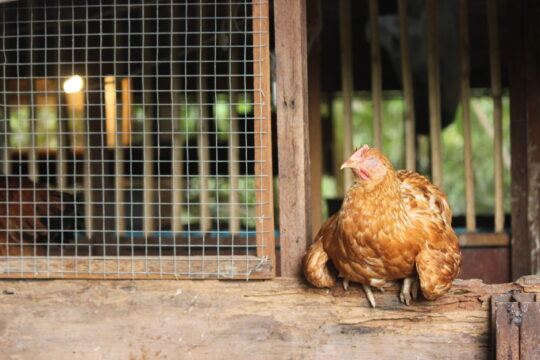
Know the signs of heat stress. When your chicken is feeling ‘hot’, she may pant heavily but still act normally. She might hold her wings away from her body, and crouch to help heat dissipate in areas under her wings.
Be aware of these early signs of heat stress. Make sure that areas of shade, ventilation and cool water are nearby.
If your chicken is panting heavily, lethargic, limping, holding her wings away from her body, she is in danger of heat stress. Cool her down quickly by submerging her body (not her head) in cool (not icy water. Then place her in a cool are to rest and recover.
Egg production will slow down. Extreme heat will reduce your chicken’s appetite, causing less calcium that can impact eggshell quality.
Chickens will lay eggs early in the day. Pick them up often and as soon as possible in the hot weather.
Breed, age and temperature are important factors. Know that your chicken’s breed makes a difference in their response to hot weather.
For example, Leghorns and Rhode Island Reds are generally more heat-tolerant. Orpingtons and Brahmas tend to fare worse in intense heat.
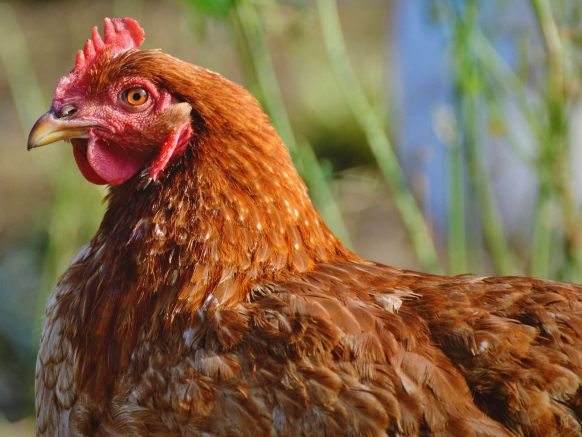
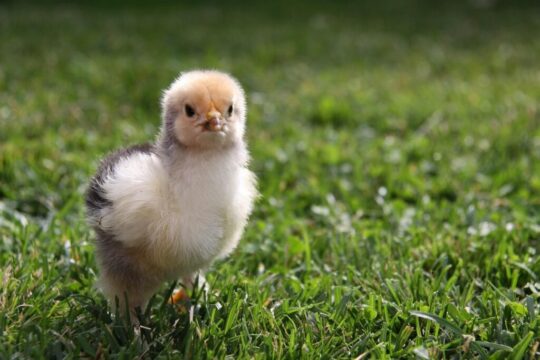
Age is a factor since younger chickens tend to struggle more with heat. They still have immature features and metabolism. For example, chicks under 16 weeks old may need extra cooling measures (misting, fans, more water).
Older hens are more resilient to heat but still need attention to stay cool in hot weather.
Heat and Humidity
Finally, temperature fluctuations, wind and humidity are important factors in heat stress. Chickens may struggle when heat rises above 90°F, then drops suddenly at night.
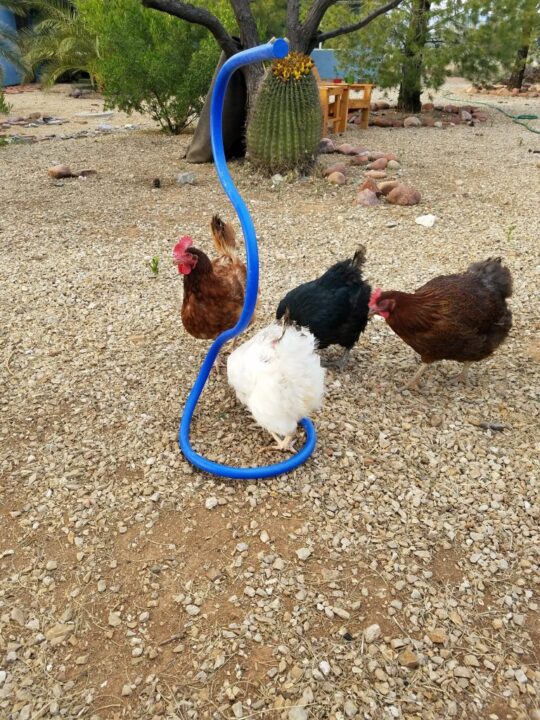
Tailor your care around your flock’s specific needs (age, breed, temperature). Be proactive and also be aware of environmental factors. Create a more comfortable living space for your chickens.
Closing Thoughts…
Summer time can be a fun time for your horses, goats or chickens. Stay cool, keep your animals cool and enjoy the season!
Thanks for stopping by!
Dr. Pet Mom
“Men are not so much the keepers of herds as herds are the keepers of men.” ~~ Henry David Thoreau
Another very informative column…thank you, Dr. Pet Mom! Great information….
Thanks for your reply, Lou. Always happy to share information about our animal friends 🙂