
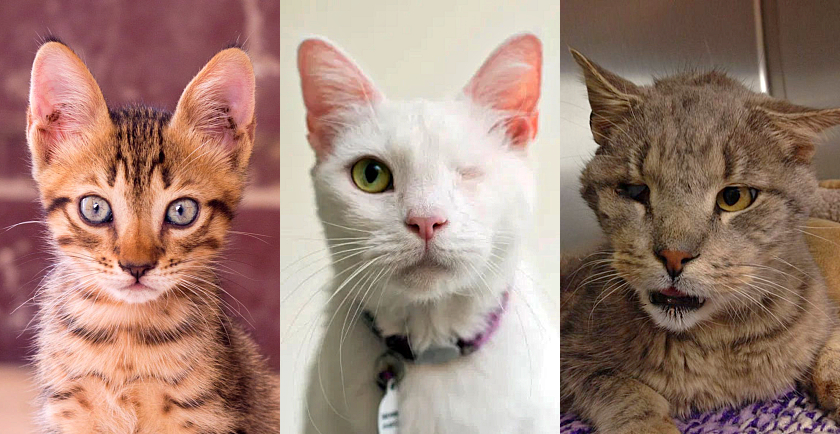
The month of August seems to be a peak season for kittens. Weather permitting, kitten season can run from spring into winter. I volunteer for a local animal rescue, Bay State Animal Cooperative (BSAC). Since late July, I’ve processed adoption applications mostly for kittens. But I’m excited to share that more people are also looking for senior cats or special needs cats!
Yes, senior cats have a very warm place in my heart. As a pet parent of my older cat, Oscar, I know the joy that older cats can bring. I wanted to adopt an older cat to help my sick cat, Mr. Bean. They made a perfect pair and I was so happy to to give an older cat a forever home.
BSAC captures many stray cats, moms and kittens. They also practice trap, neuter and release (TNR), and help sick and injured cats.

Spotlight On Special Needs Cats
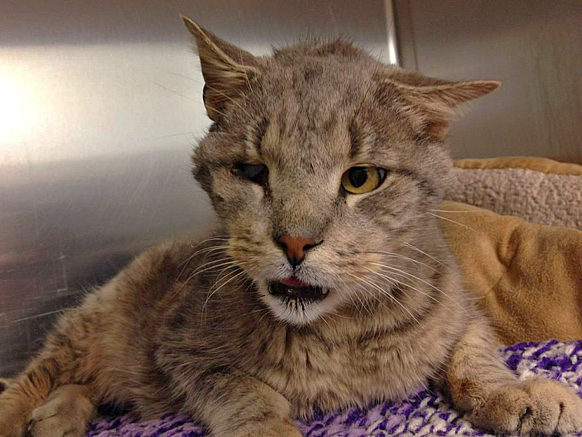
Special needs cats have open (disabled, blind, deaf) or hidden (behavioral, health) challenges. But challenges do not prevent them from living a full and exciting life.
Special needs cats enjoy the outdoors and playtime as any able-bodied pet. And they don’t feel sorry from themselves. Adopting a special needs pet gives them a second chance in life.
While special needs cats may have a medical or emotional challenge (feline immunity virus, chronic pain, anxiety), any animal can develop problems at any age. Your patience can help special needs cats adapt and be happy in any home.
Pet parent basics about special needs cats include:
- Keep them indoors for safety. A pet parent basic is that cats living inside live longer. Special needs cats need to live indoors. Monitor outdoor activities to protect them from other animals and dangers.
- Pet proof your home with carpeting around sharp corners, or scents around eating and play areas. Texture (feathers, vibration) for deaf cats, or sound (bells, chimes) for blind cats, help them navigate around your home.
- Emotional and mental stimulation are critical to their quality of life. With your patience, special needs cats can learn new tricks, and experience new smells and sounds. Time well spent will build a stronger bond with your special needs cat.
- Be sure you are up to the task of caring for special needs cats. They will need more of your patience, time, and willingness to learn. Routines will be more important. Your veterinary care can be costly (medications, special diets). Practice your due diligence before you adopt a special needs cat.

Spotlight On Senior Cats
One source noted that about 80% of kittens are adopted, but only 60% of senior cats find their adoptive families. I think we can to better than a 60% adoption rate!
Why are so many senior cats in shelters and rescues?
- Pet parent died or moved to a facility that does not allow pets.
- A family member has a pet allergy.
- Pet parent is struggling with financial hardship.
- Family breaks down by divorce.
- Pet was abandoned by pet parent.
Some rescue groups offer discounted fees to adopt senior cats: discounts on veterinary care, processing fees, free microchipping services, and vaccinations.
Many cats are mature by the end of 12 months and are nearly full grown. Then cats continue to grow until 18 months. And of course, growth depends on the cat’s breed: Maine Coon cats take from two to four years to reach full growth.
Adoption Pros and Cons
Here are a few reasons to adopt senior or special needs cats:
- Senior cats are less demanding, need less supervision. Given patience and time, special needs cats adapt to a loving home as any able-bodied pet.
- If you work away from home, senior cats and special needs cats, can adjust well to their time alone.
- Senior cats and special needs cats have well-formed personalities and adjust to a multiple pet home.
- Happy cats enjoy routines (feeding, play time). You can train cats with visual cues (deaf cats) or clicker training or scenting (blind cats).
- Your senior cat or special needs cat will teach you patience and compassion. Our pets teach us all we need to know about quality of life.
And a few reasons not to adopt senior or special needs cats:
- Your family wants an active cat. Senior cats are less active and enjoy relax by the window. A special needs cat may need special equipment (wheelchair, harness, prosthetics) to engage in daily activities.
- You don’t have the time for a senior or special needs cat. Pets are not decorations -they need your love, patience, and attention. Be sure you’re ready for pet parenting.
- You can’t afford regular veterinary care. Senior or special needs cats need regular veterinary check ups twice a year. Explore pet care discounts and the benefits of pet insurance.
- You don’t know what you’re looking for. Think about the personality, the needs of your family (human and pet), and take time before you adopt a senior or special needs cat.
- Your fear of losing a pet. You cat’s life span may be limited, depending on their age and health. Make memories and enjoy their time with you.
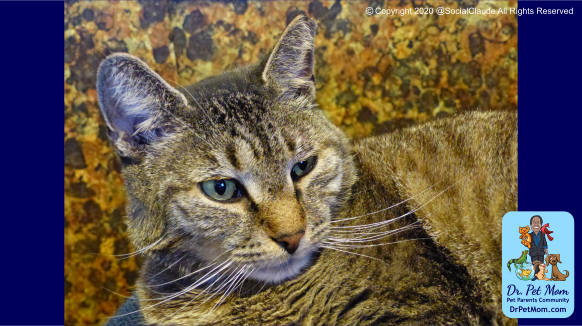
The next time you’re ready to adopt a cat, remember that senior and special needs cats need your love too!
Thanks for stopping by!
Dr. Pet Mom
Top image sources:
Blind cat: Casey Christopher/WENN.com
Senior cat: 3milliondogs.com/catbook/meet-zeb-the-stylish-senior-cat-advocating-for-the-adoption-of-the-less-wanted-animals/
“How we behave toward cats here below determines our status in heaven.”
–Robert Heinlein