

Greetings! Welcome to the November edition of Dr. Pet Mom’s Delightful Pet Menagerie (DPM) Newsletter. I hope you and your families enjoyed a wonderful Thanksgiving holiday!
Holidays include travel days for your family and your pets. If you plan to fly with your pet, airline travel tips will come in handy. Let’s talk about traveling with assistance animals: service animals and emotional support animals. Enjoy!
Our Love and Need for Animals
Human-Animals Relationship Awareness Week (HARA) (November 10-16) is all about awareness to improve the lives of the animals we love and need.
Our pets show us their love through their personalities: Silly faces, quirky behaviors, and cuddles when they feel comfortable with us. Pets bring us many joyful moments and memories.
And our needs include special ways that animals assist us as Emotional Support Animals or Service Animals.
Do you know the different types of assistance animals?

Assistance Animals: ADA Definition
The Americans with Disabilities Act (ADA) classify assistance animals into two groups: Service Animals and Emotional Support Animals (ESAs).
State, local governments, non-profits, and businesses that provide public goods and services, must follow ADA requirements for “reasonable modifications” for disabled people.
Service Animals are also included under the ADA requirements. Public spaces cannot excluded Service Animals from their facilities.
The ADA defined service animals as dogs or miniature horses trained for specific work or tasks to help people with disabilities. Calming a person with PTSD, guiding blind people, or pulling a wheelchair are examples of animals trained for a task.
One source explained that different laws cover when and where assistance animals can stay with their owners.

ADA is specific only to Service Animals in public spaces. For example, Service Animals are allowed in publicly-owned spaces (parks, sidewalks, sports facilities, hotels, retail stores, taxicabs, theaters, and concert halls).
But private spaces like restaurants or coffee shops can refuse entry to Service Animals.
Assistance Animals: DOJ Definition
The U.S. Department of Justice (DOJ) identified a range of assistance animals including:
- Therapy animals (animals who complement traditional therapies)
- Service Animals
- ESAs
- Companion animals (pets)
- Any animal species
Also, the DOJ supports any dog breed or size that qualifies as a Service Animal. If the Service Animal is required because of a person’s disability, or trained to work or perform a task, the animal is considered an assistance animal.

Perception and Confusion: Is Pet Comfort a Real Job?
According to the ADA and the DOJ, the role of Service Animals is pretty clear. Animals were trained for specific tasks or jobs to help disabled people.
But Emotional Support Animals are considered pets, by the ADA. The ADA laws are more lenient towards Service Animals and their owners, but are less favorable toward ESAs.
So the main difference between ESAs and Service Animals is that Service Animals are working animals, not pets.
But here’s where the confusion comes in: ESAs can be any animal that offers emotional support to their owners. Although the ESA is not trained for a specific task, they still give comfort to people with a variety of disabilities.
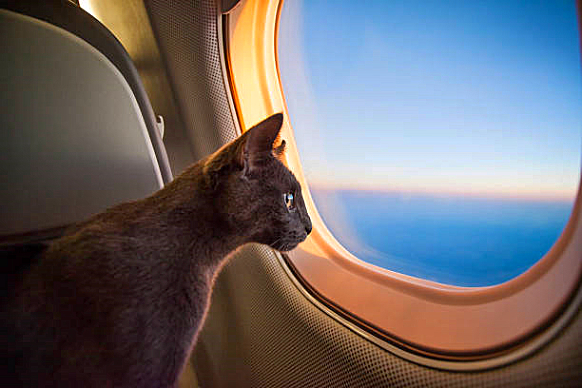
But is pet comfort a real job?
Cuddling on cue or sharing a paw are comforting, but are not considered a trained task or work by the DOJ or the ADA. The animal’s instinct takes over to express their love and to calm their owner.
Initially, animals traveling with their owners were protected under the Department of Transportation’s Air Carrier Access Act (ACAA). But over time, the airlines restricted travel with pets because people abused the system.
Fraud, fake ESA certification letters, or using ESAs to avoid paying pet fees made the airlines take another look at their pet travel policies.
Untrained animals caused problems for the airlines. Scratching and biting, unsanitary conditions, animal aggression and disruptive behaviors are some examples.

You can still fly with your ESA. But in 2021, the DOT revised the ACAA with strict and clear regulations about ESAs:
- ESAs are no longer in the Service Animal category, but are now treated as pets.
- Additional fees and travel restrictions are placed on ESAs.
- Only trained service dogs qualify for airline accommodation during flights.
ESAs truly deserve special accommodations. A reminder that airline fees for ESAs can range from $95 to $125 each way for domestic flights, and $150 to $250 each way for international flights.
An alternate choice is to fly your pets on Pets Airways where “pets aren’t packages, they’re Pawsengers,” or RetrievAir where “where pets travel as seamlessly as their owners.”

Closing Thoughts…
If you’re planning any domestic or international airline travel with your pet, remember the 6 Ps: Prior Planning Prevents Piss Poor Performance.
Be sure to check out the airline requirements, keep your pet’s medical and travel records up to date, and double check for any fees from your airline of choice.
Here’s a link to the airlines that allow ESAs on board in 2025.
Safe travels and enjoy your trip!
Thanks for stopping by!
Dr. Pet Mom
“This earth was made for all beings not just human beings.” ~~ Anonymous
Thank you, Dr. Pet Mom. Your latest article made for some very interesting reading! Thank you for clarifying the different types of service animals. Have a very Merry Christmas and a joyous 2026!